Fynbos Ink Set

 fynbos-ink-1

FOR SALE      FOR SALE     FOR SALE     FOR SALE     FOR SALE    FOR SALE  

Fynbos, the vegetation found in the Western Cape, South Africa, is so rich and diverse that it forms an entire floral kingdom of which there are only 6 in the world.

This subtly coloured ink is made from a traditional recipe using fallen leaves and in no way harms our precious plant life. The hand-made reed pen is made from bamboo which is a sustainable and renewable resource.

In Fynbos Ink Set A, apart from the bottle of ink and the pen, a fallen leaf from the silver tree (Leucadendron Argenteum) is included in the cellophane packet. Traditionally used as a bookmark, it epitomises the magic and spirit of fynbos.

In Fynbos Ink Set B the bottle of ink and bamboo pen are packaged in an unique and artistic manner.  Waste materials have been used to create a reusable container in which the bottle of ink nestles. The tip of the bamboo pen which sits on top of the container is protected with a pretty cardboard form.

Because the ink has no harmful preservatives, you need to keep it in the fridge after opening.

OPTION 1

50ml bottle of Fynbos Ink                     R45.00

OPTION 2

Fynbos Ink Set A                                    R75.00      

 fynbos-ink-2

OPTION 3

Fynbos Ink Set B                                    R120.00


fynbos-ink-3     fynbos-ink-4

Prices do not include postage

Posted in Products, the natural world | Leave a comment

District 6, the theme park

My submission to a competition on visions for a future Cape Town, is this idea which has been banging around in my husband’s and my head for many years:

I propose that District 6 be turned into a place where the ‘apartheid experience’ is recreated. Visitors which could include tourists and South African school children too young to remember for themselves, could, for a fee (sliding scale, please so that locals can enjoy as well ) be taken into the district for an experience they would never forget.

Divided into zones which approximate real neighbourhoods and nodes of interaction, such as the vibrant District 6 itself, a dumping ground, Vlakplaas, and detention centres, parks with non-whites only benches etc, the theme park would provide a number of environments and situations.

On entering, visitors would be issued a dompass and shown their distinctly un-salubrious quarters which could be based on hostels. Food in the form of pap and chunks of grisly meat would be the foodstuffs served. On walking in the street, they would be accosted by police on a pass raid and arrested. A swoop on a bar would lead to more arrests on suspicion of the Immorality act. In the middle of the night, officials could wake up residents and herd them into trucks to dump them in the dumping ground – a bit of unused land, rather like the present Distict 6 -with no bedding, etc. Visitors could be arrested for having banned books in their possession, planted in their quarters beforehand. Posters advertising protest meetings plastered here and there could lure visitors to attend which would result in other opportunities for whistle-blowing, baton-wielding, bullying by police and arrests.

Needless to say, all visitors would eventually be jailed at some stage during their stay.

To provide some relief, cultural highlights such as shows by wandering troops of musicians of varied backgrounds, apartheid poetry readings, drama and street art would be interspersed with the more unpleasant experiences.

Visitors would be given certificated when they left as momentos of their stay -and survival!- and a shop selling themed items such as reproduction whites –only signs, enamel kitchen ware, torture devices, mbiras, truncheons etc, could end off the visit to the theme park.

The project is excellent for job creation in the form of the usual staff plus large troops of riot police, Security Branch and jailers as well as a large number of civilians used to provide local colour.

All profits made from the venture would go towards development projects such as a nationwide extra-curricular after-school enrichment programme.

Posted in issues | Leave a comment

Nwot Epac

nwot-epac

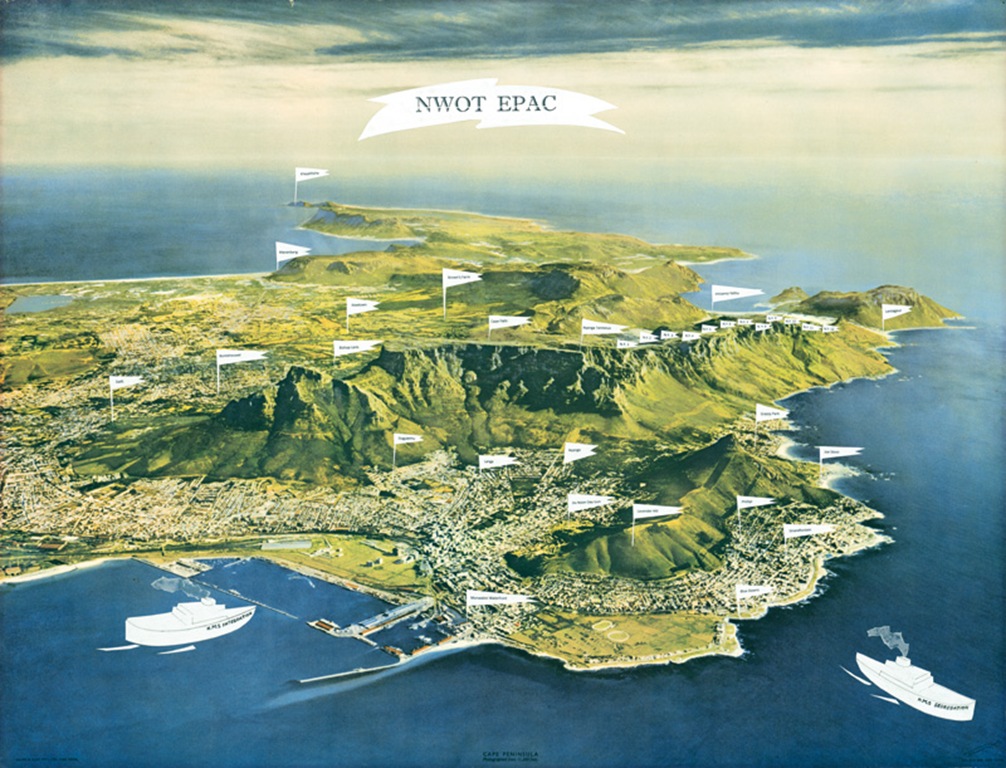
My eldest son, Noah, and I worked on this submission to a competition on visions of a future Cape Town.

Perhaps the image will still be too small for you to see what we have done to this familiar and rather old-fashioned view of the peninsula. The pennants flying identify the following places: Monwabisi Waterfront, Lavender Hill with the du Noon Day gun on its slopes, Lentegeur where once the hideousness that is Llandadno was and is. Brown’s Farm flies on the soil of Constantia, Nyanga, Langa and Gugulethu are cradled in the city bowl, the Cape Flats are to be found on the flat top of Table Mountain with Nyanga terminus which has taken over the cable car house at the one end. The 12 apostles are named N.Y1, N.Y.2 etc, in the imaginative style of our former township planners, while the Clifton bungalows which do in any case house some of our strugglistas, has been re-visioned as Joe Slovo. Khayelitsha is ‘doringone’ on the point, and grassy Camps Bay is Grassy Park. You get the idea, but to make sure the message is as clear as the weather on the particular day this shot was taken, a ship named H.M.S Segregation is heading out to sea while the H.M.S. Integration is pulling into port.

Nwot Epac ( or in slang, Naughty Plek) is my city.

Honourable Mention, MultipliCITY Competition

Posted in inversion, issues | Leave a comment

Launched along the river

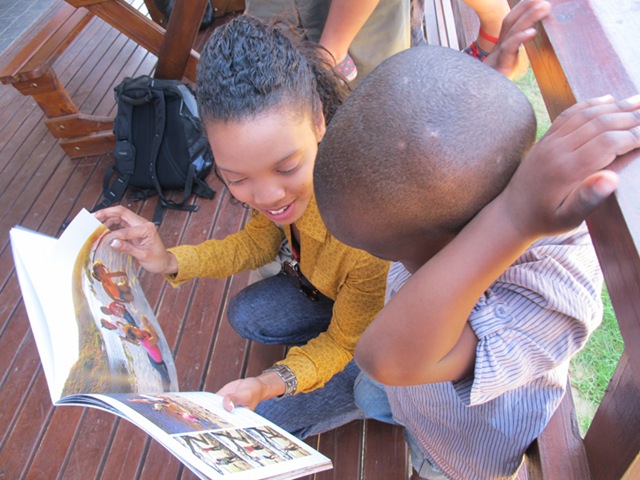
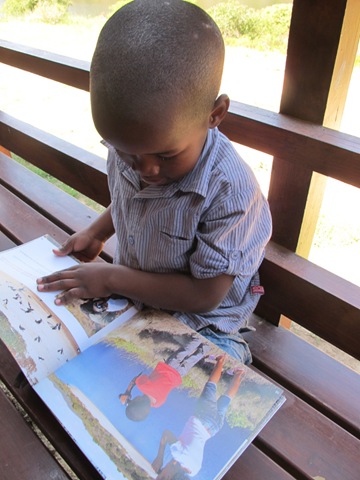
On 28th September 2010 we launched the book “Along the River” at the Bontebok Park just outside Swellendam. The multilingual book, published by The Early Learning Resource Unit and funded by SEEDS, is part of a series of books I have been working on with a strong science and maths focus. I photographed a group of pre-schoolers as they explored the surrounds and banks of the Breede River, making discoveries and learning along the way. Here is Aphiwe Badela, helped by one of the guests at the launch enjoying seeing himself in the book!

bonte-launch-1 bonte-launch-2

Posted in Children's book illustration, People, the natural world | Leave a comment

I saw a ship a-sailing…

galleon-1 galleon-2

I saw a ship a-sailing, a-sailing on the sea, and oh, but it was laden, with pretty things for thee… except this ship is not on water but on rock, rock washed in drifts of grey, ochre and  green, flecked with lichen, under an overhang at the entrance to a cave high up in the Groot Winterhoek mountains, 60km from the ocean as the crow flies.

Thirty years ago I studied this famous, iconic image in History of Art and I remember the impression it made on me then. The concept of two civilisations developing on their own merry and distinctive paths intersecting at a point in time and then being captured in this delicate image, was mind-blowing. Visiting it for myself would once again strike the gong that I remember having been set off so many years ago in that darkened lecture room at Wits. 

I have recollections of reading or hearing the following scenario, historically so plausible, it is hard not to view as fact: a Bushman (the name many Bushmen like to be called in preference to San , I remind you from the political correct fold) was walking on the strand one day 300 years ago  and saw, perhaps for the first time in the history of his clan, the Europeans and their technology in the form of this galleon. What he witnessed for an hour or two passing by on the waves must have been like a dream. What did he make of it?  In the same way we might snap something on a cellphone , did he quickly scratch out the form on a piece of bark and pop it into the top of his moochi to show people back home and/or as future reference? Or weeks or months later in the Winterhoek, having all but forgotten the sight in the concerns of his daily life as the urge to do a bit of art wiggled in his fingers and he found a nice clean spot to get going, did he find the image suddenly before him in his mind’s eye as clear as a reflection in a rock pool ? I like to think it is the latter suggestion because it binds this artist closer to me, duplicating in him back then the surprises I love to make in the process of making art now. Also, it brings into play the power of eidetic imagery, the ability of some artists ( unfortunately, not I!) -and some idiot savants too- to retain a visual image for a great length of time, to hold it accurately in space before their eyes and to reproduce it so faithfully it is as if they are tracing.

Looking at the galleon itself brings a welter of associations: Is it too fanciful to mentally stretch the rocky net of crackle and flake on which she sails as echoes of ocean waves ? Or a tinted backdrop of a sunset at sea?  Are the weathered protrusions that crest the hills that surround  this site merely coincidentally “ship-like”? I bestow unto this unknown Bushman artist complete mindfulness of the subtle irony he is plying.

The humour and wit of the work is a tickle with a feather, immediate and fresh. The temptation for romantic embellishment is great. I find myself writing “… there is a wind that fills the sails, gets the pennants dancing on the tall masts and propels the ship along. It is as if we have blown it out of our own lungs. Speed, light and grace bloom on the rosy cheek of the rock. What is captured is a moment in time rather than merely an image.”  Like the scatterings of shiny, black dassie droppings that exude from the crevasses at the cave, she invites poetry and breeds metaphor, this ochre fingered lady of the rock.

This I know. The galleon is right up to date. Her context/content pushes the big buttons.There is the same crunch as when you bite into good contemporary art. But she is much, much greater because she has stood the test of time. She asks us: What is it to be human?

Posted in Art commentary, Travel | Leave a comment

Jellyfish

Check these mandalas washed up on the beach at Arniston. Alive? Dead?

How strange and beautiful they are.

jelly-fish-001  jelly-fish-008  jelly-fish-027 jelly-fish-021  jelly-fish-033 jelly-fish-012  jelly-fish-009  jelly-fish-b1  jelly-fish-b2  jelly-fish-b6  jelly-fish-b3 jelly-fish-b4  jelly-fish-c1  jelly-fish-c3 jelly-fish-c4  jelly-fish-c6  jelly-fish-c7

Posted in the natural world, Travel | Tagged | Leave a comment

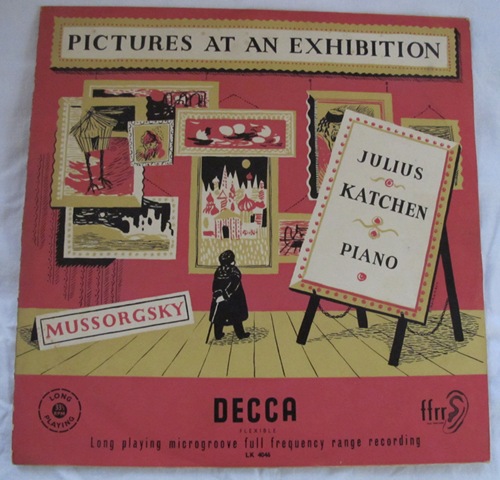
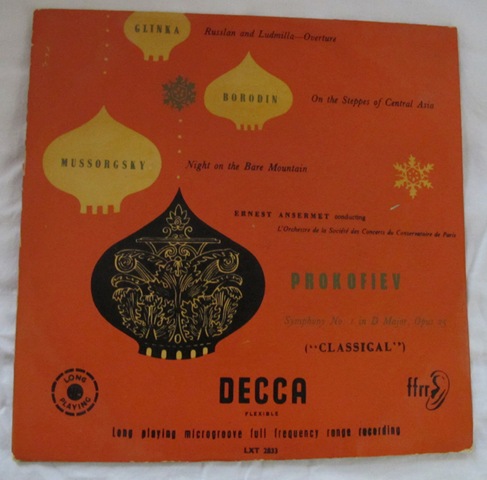
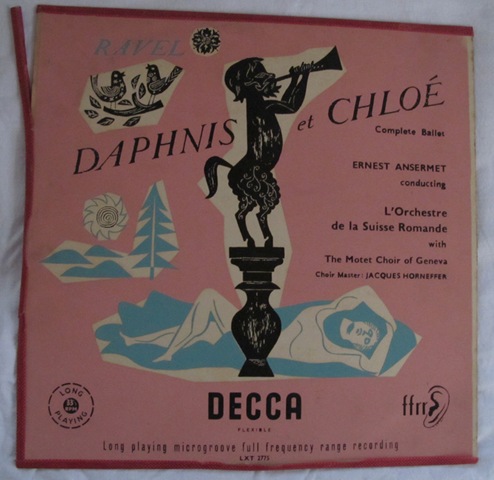
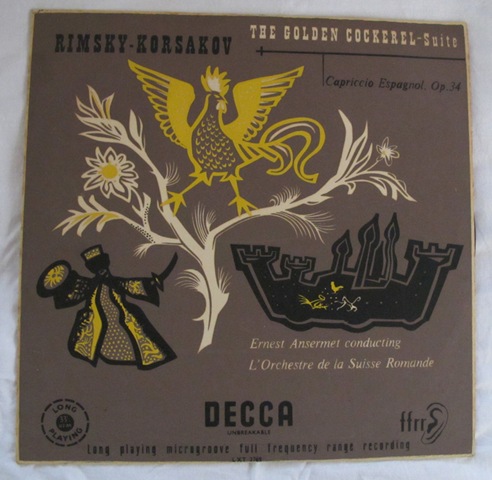
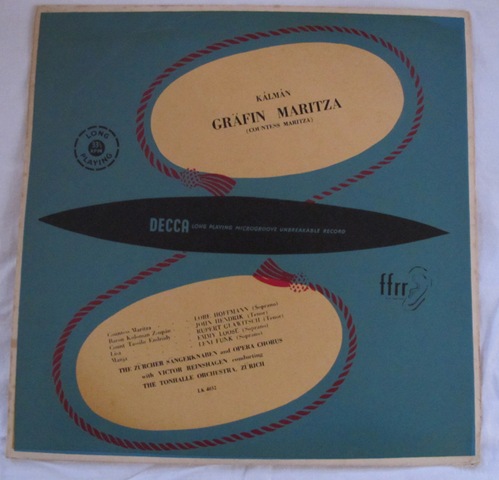
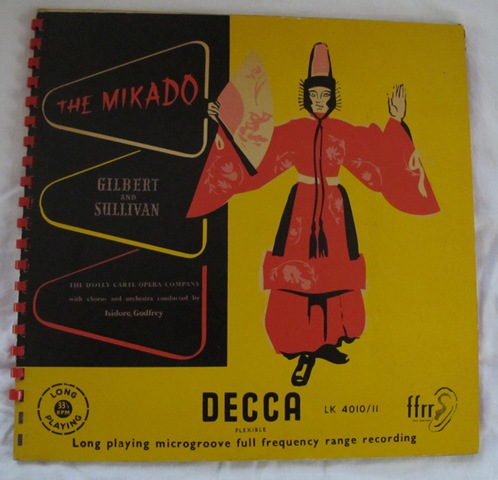
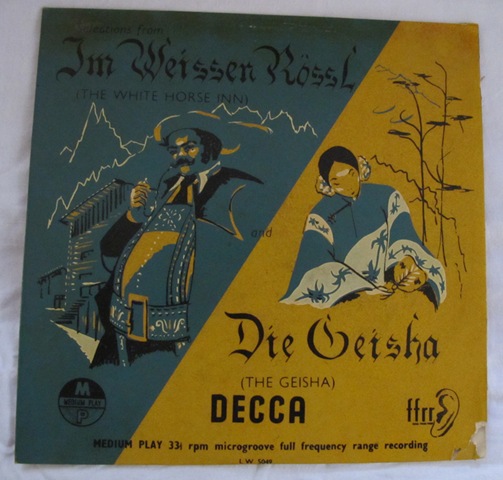
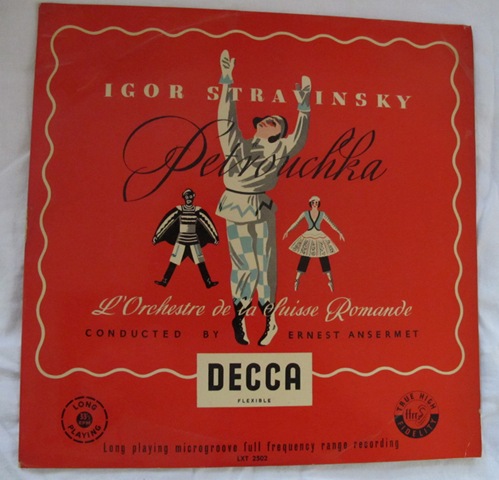
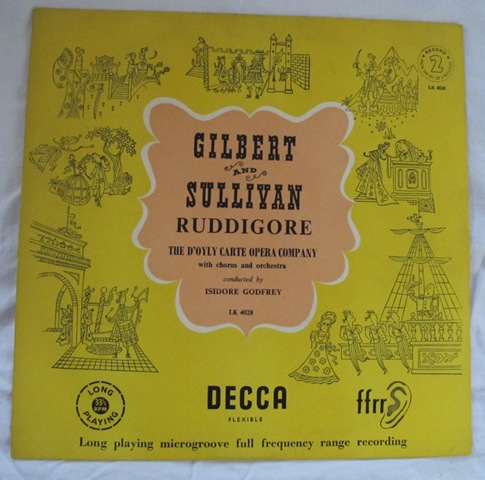
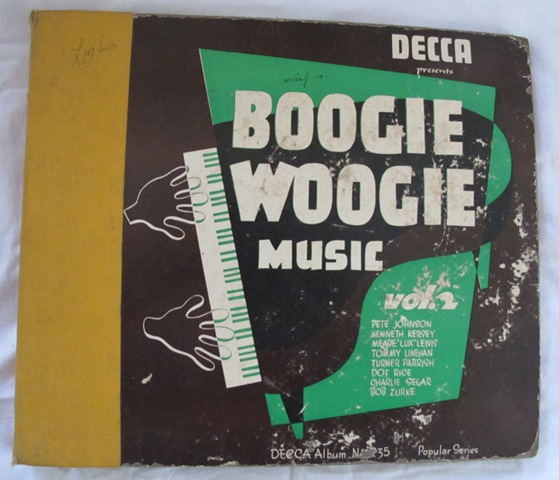
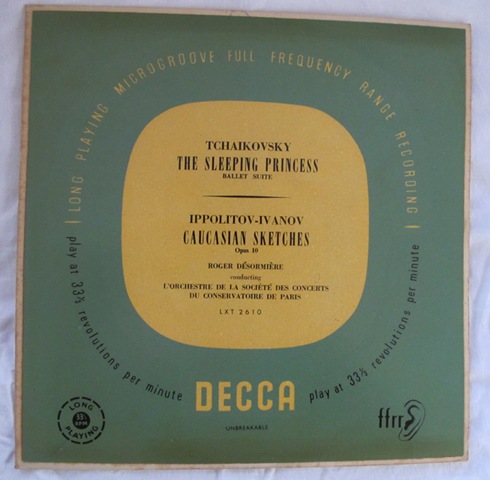
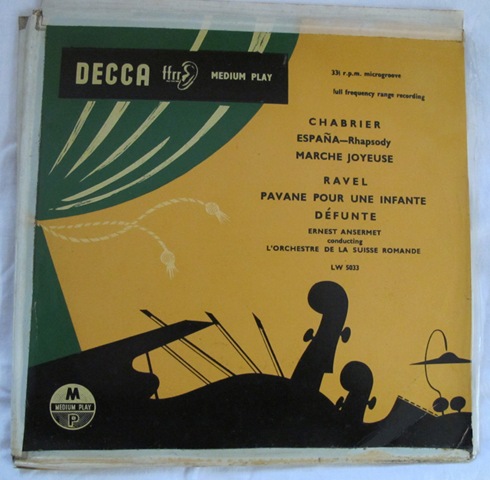
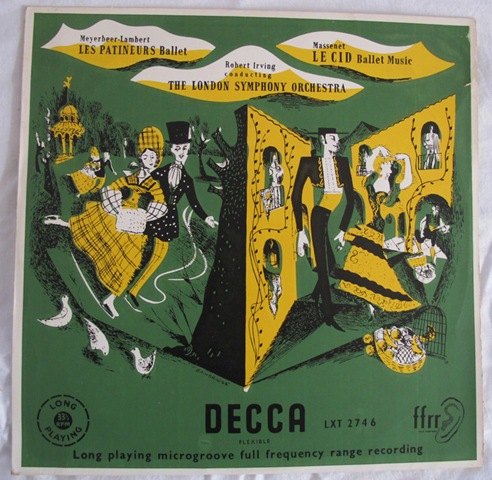
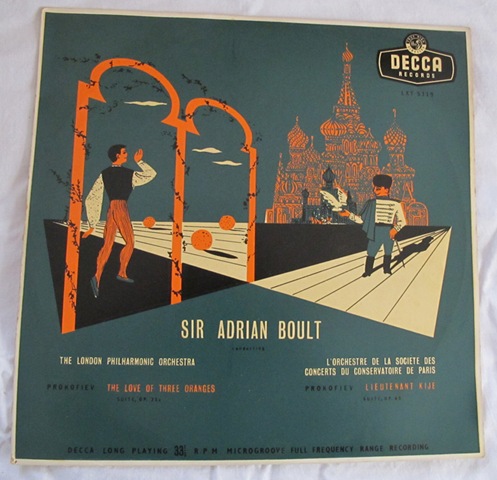
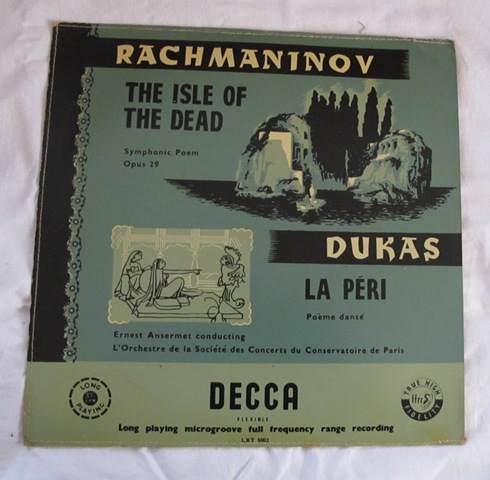
Lekka Decca Decor

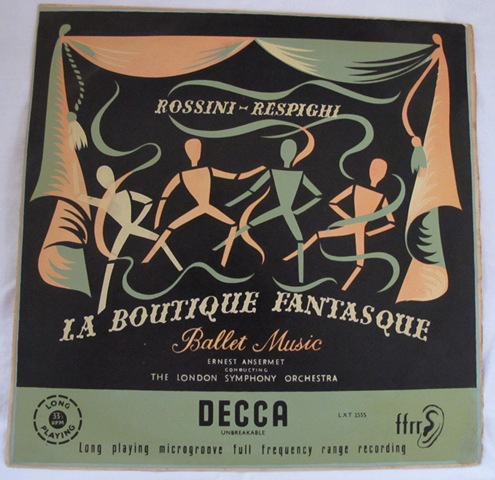
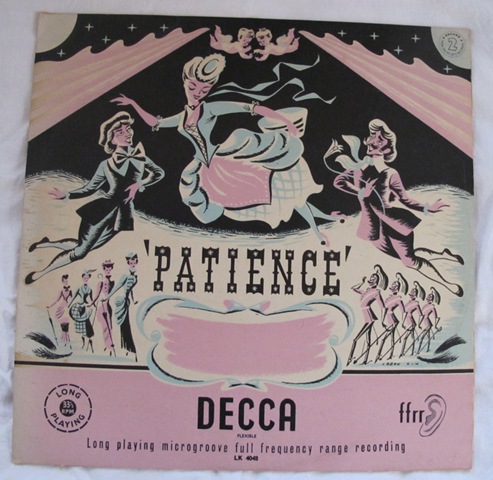
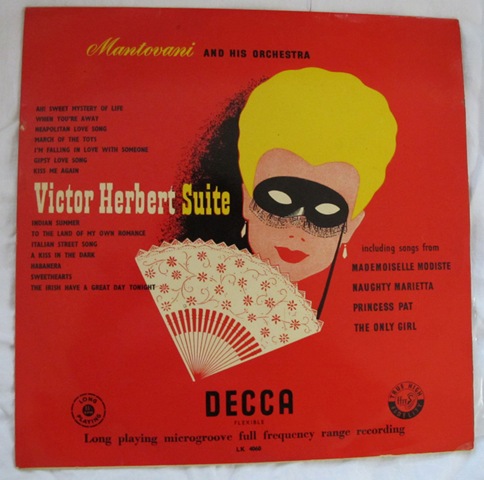
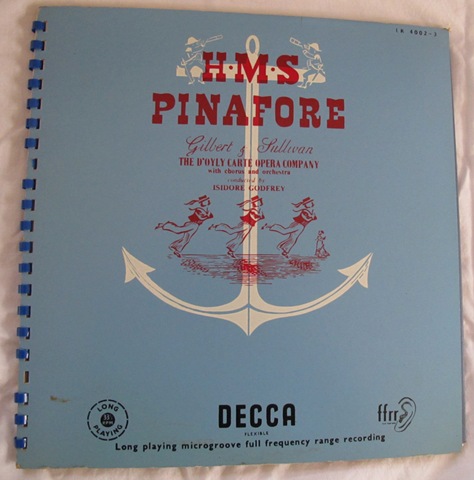
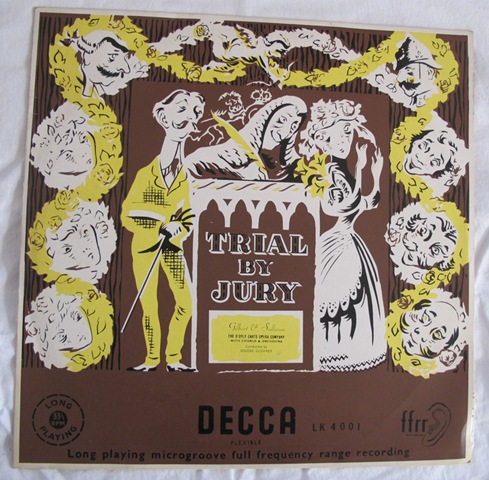
Gilbert and Sullivan is not a favourite of mine and some of this music is a strain on the ears. The DECCA record covers, by contrast, are, I think, design delights.

Decca-1  Decca-2  Decca-3

Decca-4  Decca-5  Decca-6

Decca-7  Decca-8  Decca-9

Decca-10  Decca-11  Decca-12

Decca-13  Decca-14  Decca-15

Decca-16  Decca-17  Decca-18

Decca-19  Decca-20  Decca-21

Posted in Art commentary, Flea market finds | Tagged | Leave a comment

Study study

It’s been yonks since I’ve had to write an exam and let us hope that I never will have to again endure that little agony. However , I have just read the most fascinating article about the latest research on study methods and I’m going to pass it on to all you younger and unluckier people who might need it.

One, it’s a good idea to study in a number of different physical environments. What they mean by this is not to have one physical space set aside for study but to revise things in a variety of settings. It seems that every time you study a topic the colour of the carpet or fall of light on particular curtains attaches to the subject. More spaces equals more attachments. I’m not sure if the richer the associations the better per se or the more you muddle up the associations the more likely the materials you are absorbing peel away from the context and stand alone. All I know is that marching up and down the garden reciting history dates as I remember doing for matric, wasn’t maybe such a bad idea.

Two, forgetting is good. When you study something, it is best to revise it once you have nearly forgotten it rather than sooner. It seems that when you re-remember something it sticks around much longer than when you revise something you already know.

Three, like a musician who practices by doing some scales, a piece and a number of exercises, variety is better than a single focus. Revise a number of allied concepts together. It seems that you need to be using your brain to sort out which set of operations to use when you study rather than doing a thousand examples of one thing in the hope of drumming a single operation into your brain. (Interestingly enough, this discounts KUMON maths, which is all about drill and which, coincidentally, never helped our maths-deficient son.)

Testing is good. That is not necessarily preparing for tests but doing them. The reason for this is their difficulty. It seems that one cannot avoid the challenging and difficult route to learn. Learning is not fun, it is HARD!

I have finally laid to rest (!) my fantasies of memorising huge chunks of knowledge or learning a foreign language by listening to tapes while I sleep. Awake seems to be the very least you need to be to learn and then some more. Good luck!

Posted in issues | Tagged | Leave a comment

Unforgiven and lonely

It’s been a week of being laid low by a horrible dose of bronchitis. In between feeling sorry for myself, I fall asleep to showers of music cascading from the radio, wake to snippets of talk and watch a bit of television, my head somewhere above it all in a kind of tethered updraft. The illogical states that my fever brewed were, however, sharply pierced by a documentary I watched which left me stone cold sober.

With the chilling title “I don’t like Mondays”, it presents the story of Brenda Spencer, one of the first ‘school shooters’ in the USA, pre Columbine. What was unusual about the documentary was that it went beyond the sensationalistic details of the crime itself in which Brenda, aged 16, killed two adults (including a headmaster), injured a policeman and a number of school children.

We see Brenda at the time of her arrest, a slip of a girl, pale, with glasses and zits, two streams of long red hair falling from a beanie jammed on her head. Then we see her 25 years later being brought into a parole hearing, in chains, a huge, butch slab of a woman.

When she was asked why she did it back then, it was reported that she mumbled something along the lines of “I don’t like Mondays” which was understandably jumped on by the public (and songwriters!). You get a sense that she has spent 25 years trying to figure out the real reason and although she now talks about her situation at the time -a sad, dysfunctional family – she still has not come up with a plausible explanation.There is this maddening sense that the answer to this conundrum lies within the perpetrator herself and we want to shake her and order her to tell us, and then this frustrated realisation when we reach a blank. She is as much at sea as we are.

Although, I think it is dangerous to discount personal responsibility  – and Brenda, after serving 25 years in jail does acknowledge her crime and ‘show remorse’, in the parlance of the American justice system – maybe this case has brought me a step closer to acknowledging the huge cauldron of sadness and rage that lives in the bottom of ALL people – that we share as part of our human inheritance  – and which circumstance (and this is where society must take some responsibility: easy access to guns, brains gone dead from video games and media saturation and the void that so many children grow up in as parents, schools and society step back in a toxic laissez-faire neglect) forces through weak and vulnerable individuals to spew out in our daily world.

There were long interviews with, among others, her mother, the policeman who was badly injured in the shooting, the victims including the widow and daughter of the headmaster, and finally the father who had never spoken until this documentary was made. You know what? They were awful. The unbelievably cold, neglectful mother, the tight, retributive widow and her daughter who deserve every shred of sympathy and whom I struggled to like, the shot-up policeman who says he will get out his guns the day she is released, and worst of all, the father.

Predictably perhaps, Brenda presents to the parole board the physical and sexual abuse she suffered by her father after her mother abandoned her. In her defence, her father does seem to be a pedophile.  Very soon after the crime, he hooked up with a cell mate of Brenda’s, a girl even younger than her and spookily, a dead ringer for her. The girl fell pregnant and abandoned their daughter, Brenda’s half sister,to be brought up by the father, where she still lives.If that doesn’t give you the creeps… What’s even sadder is that it is only her father that visits Brenda regularly. No one else.

Brenda has been a model prisoner. She says she wishes she could undo what she did, but cannot. She has tried to better herself and learnt to be a fork lift operator. She thinks she would be able to find work as such if and when she is released.The parole board question her on the one incident which is a blot on her record. After a failed jail romance, Brenda tattooed her own chest with a paper clip. Why did she choose the words courage and loyalty, they asked her.She responds that a mistake was made, the words in rune were unforgiven and lonely.

Honestly, I am surprised to find myself on this side of the crime issue. With a husband who was recently held up with a gun in our home and a history of pooh-pooing liberal sensibilities over the use of the death penalty – what if it were your child? I remember saying – why does this girl/ middle aged woman make me question what I thought were firm opinions? Why this story and not Aileen Wuornos’s ( “Monster”) which didn’t affect me nearly as much as it did most people? In my book club “We need to talk about Kevin” by Lionel Shriver was a talking point. I didn’t quite buy the premise, though, that Kevin was horrible from birth. From what I’ve read about these shooting kids they are not very different from your average teenager. Sure in some cases they were angry teenagers, not unusual. Parents, teachers,friends, everybody that is asked all say the same thing: they never saw it coming. That is what is so frightening.

Brenda was refused parole. She was told that she could apply again four years later. She did not look visibly disappointed. Her bulky, impassive figure was led out of the board room in chains.
Posted in issues | Tagged | Leave a comment

"What’s behind your work?"

whats-behind

Posted in Children's book illustration | Tagged , | Leave a comment