Tibet

Years of day dreaming have taken me to many places. It was an escape route from school with its impenetrable and interminable maths classes and pointless drill, from endless hours on the weekend – almost worse than the long school week – lying on my bed, the incessant drone of lawn mowers grinding into my skull,  stupefied in the suffocating Johannesburg suburbs. I transported myself to any spot on the globe other than the point ascribed to me by fate that had me pinned to a school desk or a bed, waiting for my life to begin.

The places I visited were geographically vague, more feelings than places. It might have been Paris but a daydream form of it:  a sense of melting freedom as I wandered through a kind of mist to little vignettes I now realise were garnered from a printed silk kerchief: frilly lamp posts, swishing skirts on pavements, poodles on leashes, cathedral spires in the sky, all in the language of arty brushstrokes.

It might have been Greenland, a country to which I was drawn because green was my favourite colour. The fact that Greenland took up so much space in my text book world atlas, hanging as it did on the very top rather like a pendulous breast, made it ideal for my form of day dreaming  because it looked significant even though I knew nothing about it and no one else seemed to know anything either. ( While the capitals of Europe were a messy jumble, jostling for space with the names of the country, crammed in any which way, it was refreshingly blank, no rivers, no capital, nothing just its oddly attractive name.) I filled it with all the green things I knew, I turned the people into green tinged beings. I made the soil green and the mountains, perversely, purple. I slid down rivers of ice that glowed green, I interviewed animals with green shaggy coats…But don’t get the wrong idea. This was not happy moments of unbridled childish imagination. Underneath this voyaging was the tick, tock of the clock. The only requirement for each destination loop was that it be sufficiently enthralling to eat up time so that when I was came back the lawn mower would have ceased and I was an hour or two closer to adulthood.

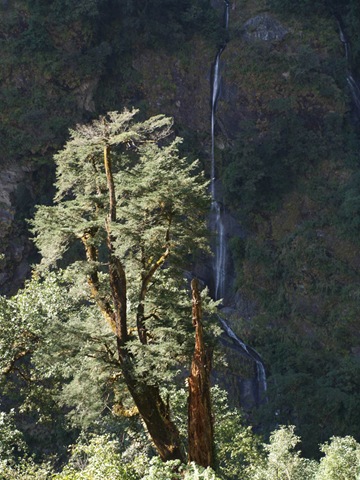
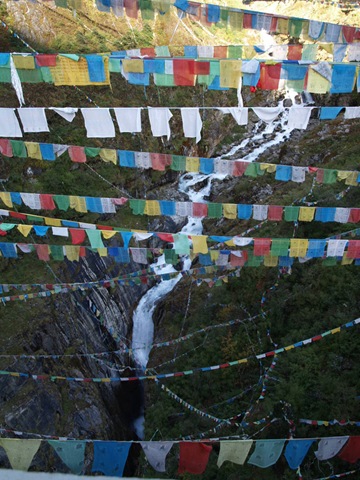
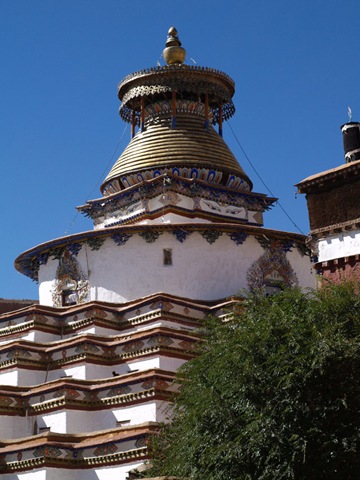
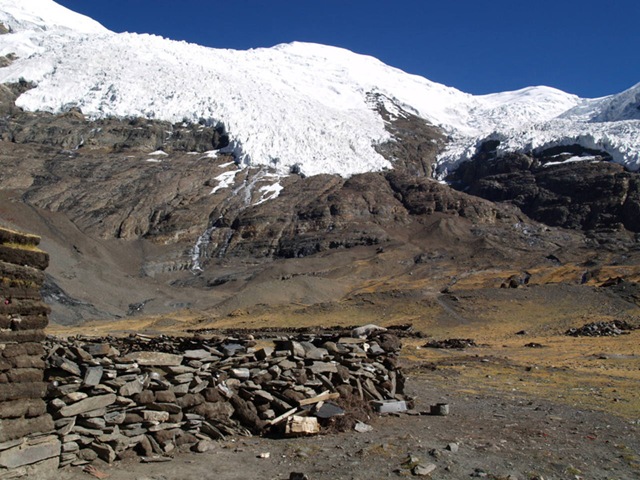
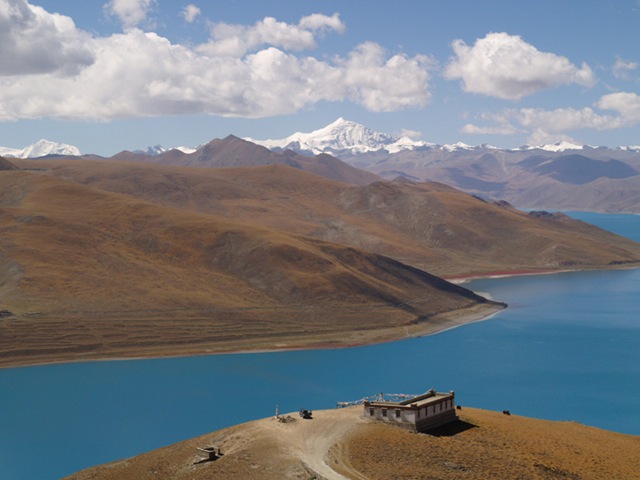
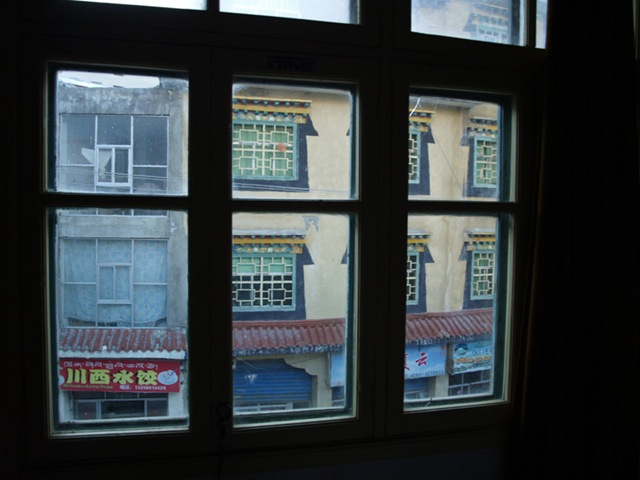
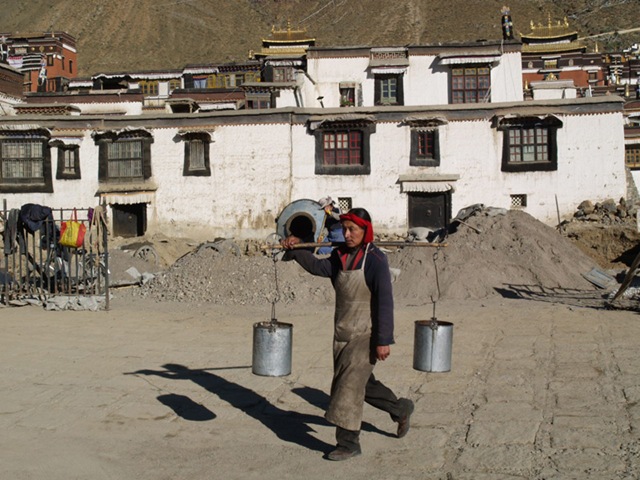
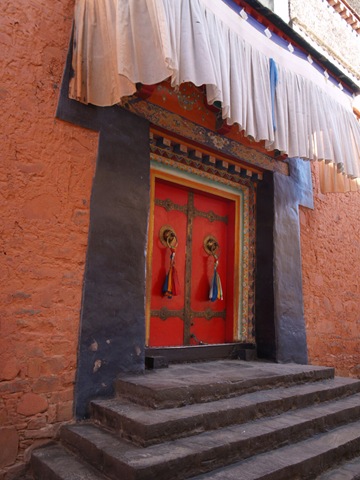
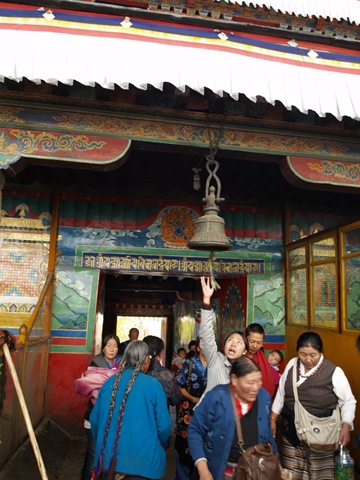
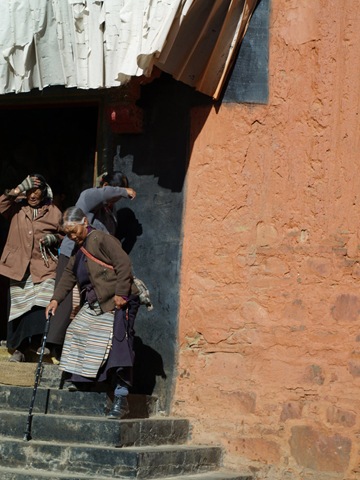
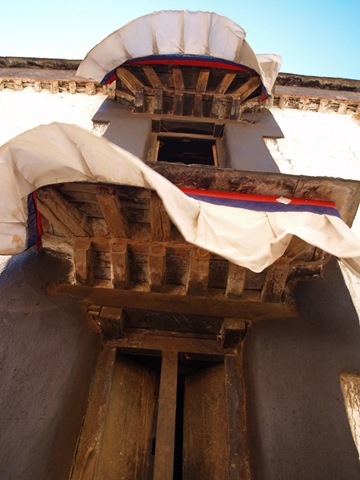
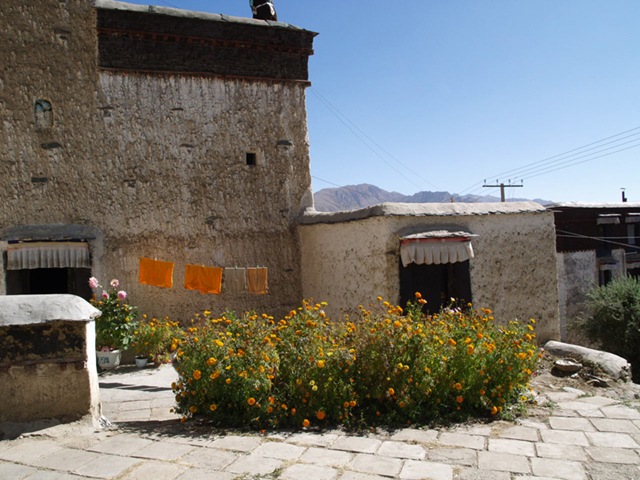
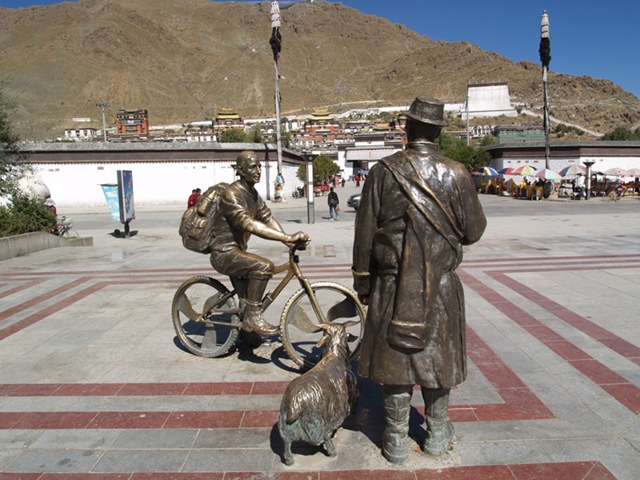
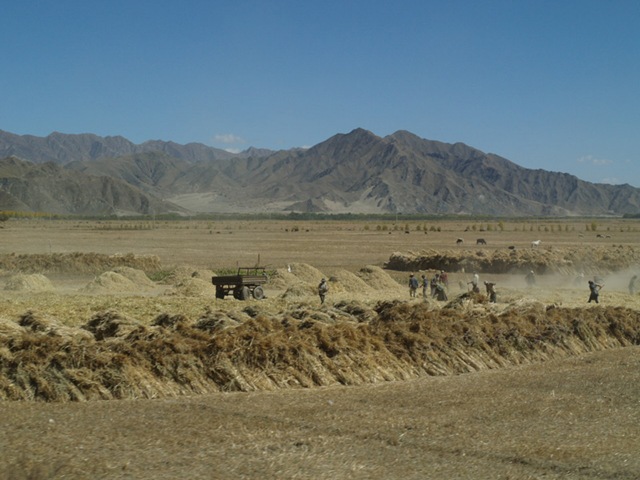
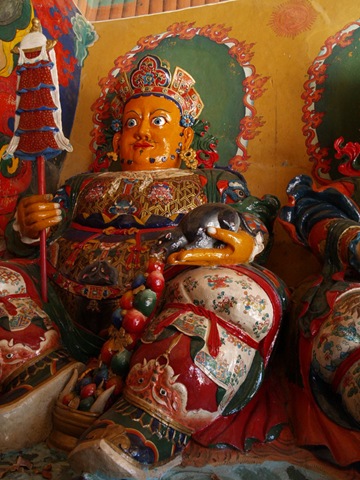
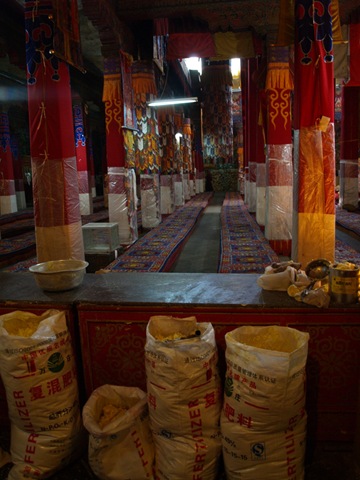
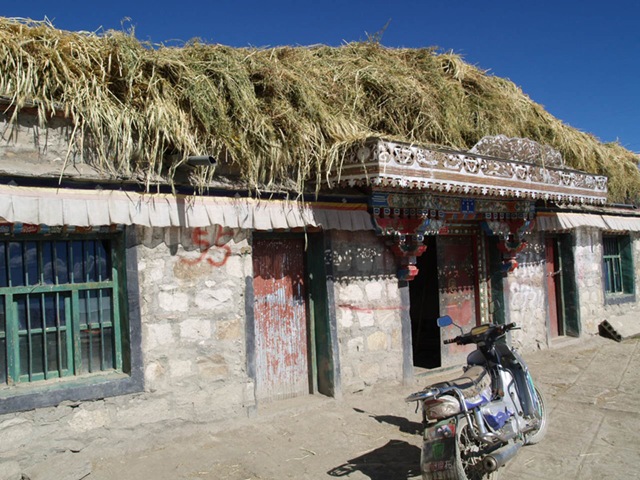
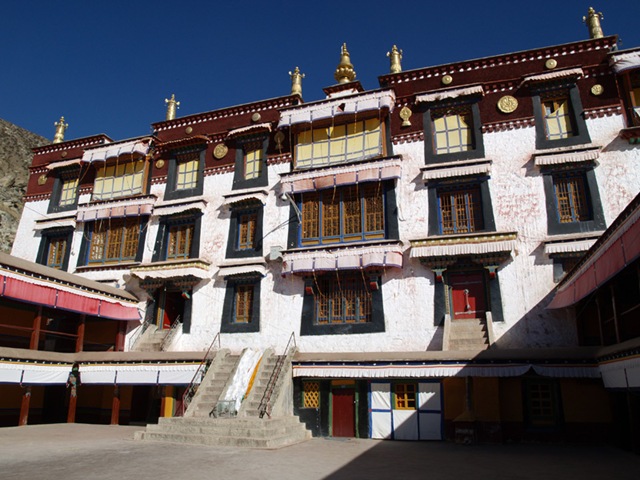
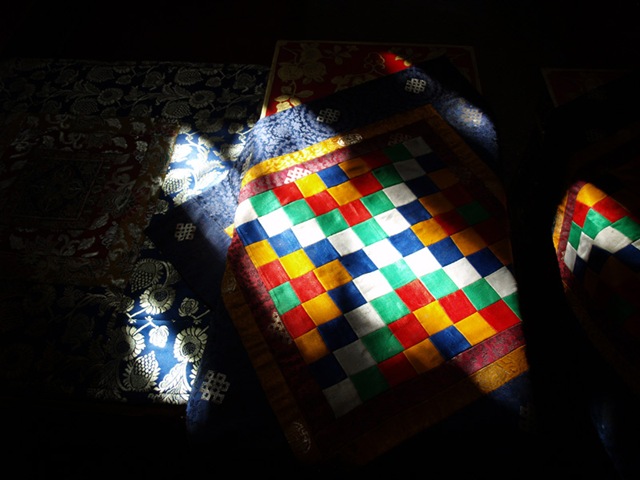
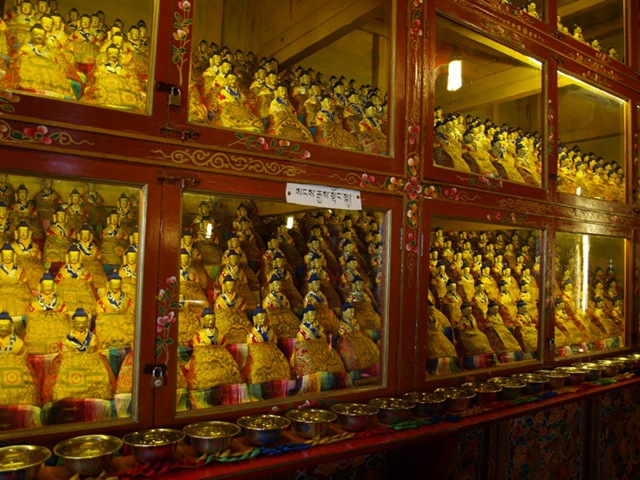
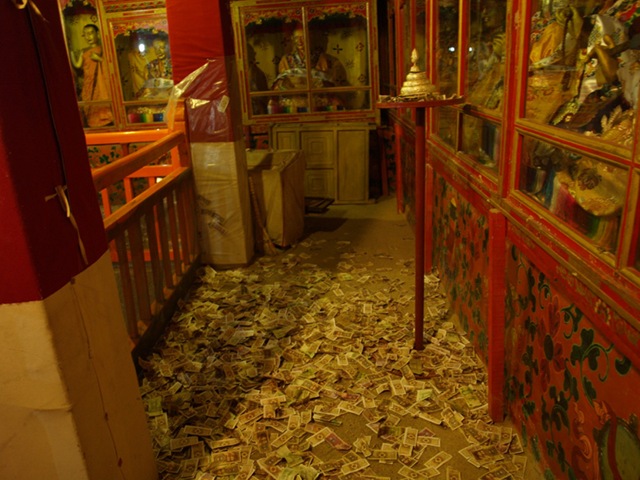
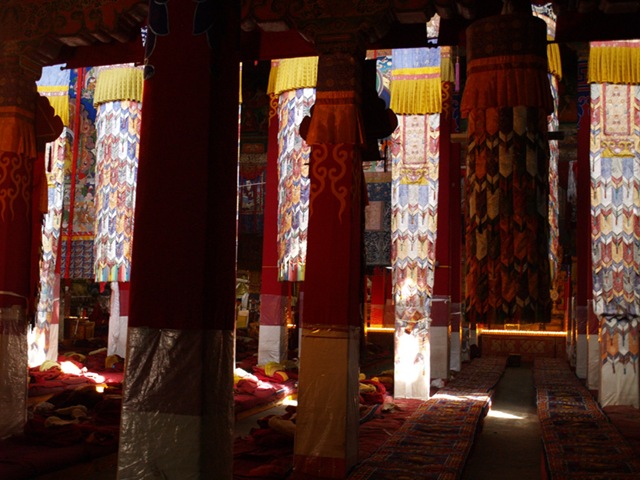
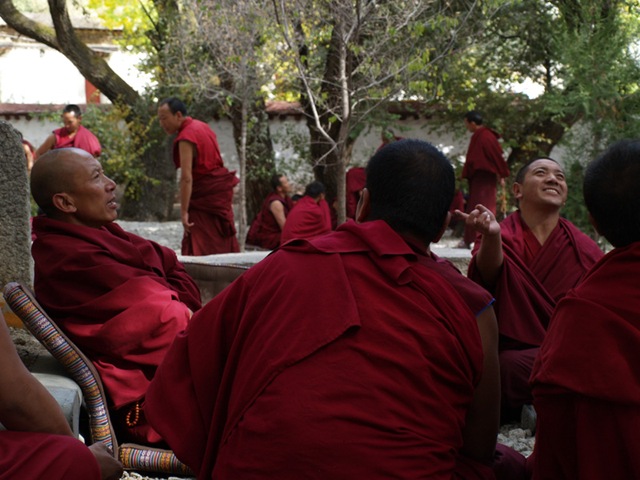
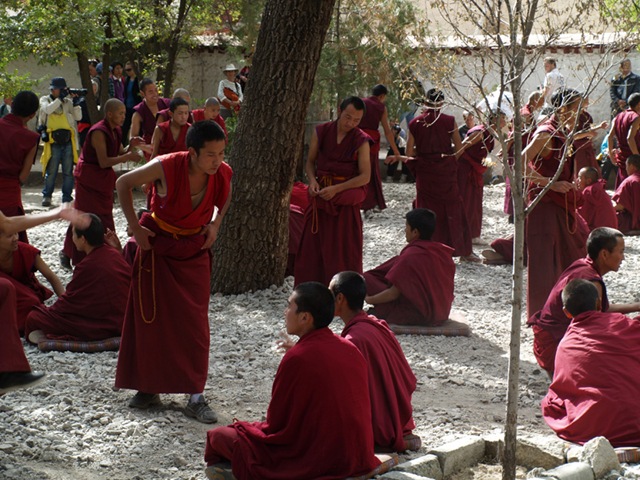
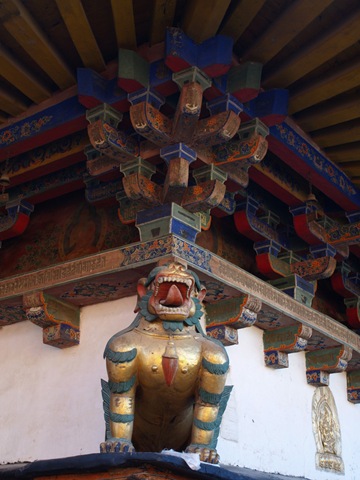
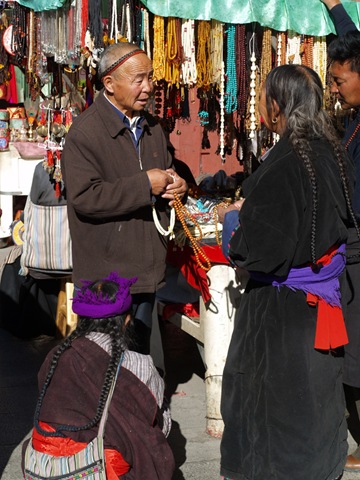
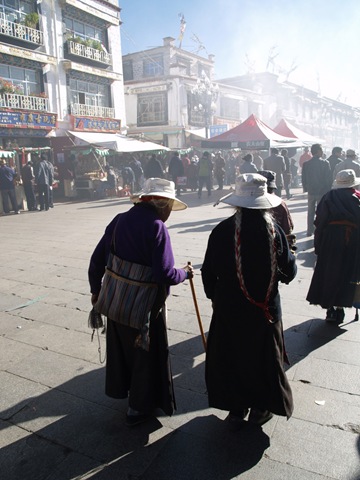
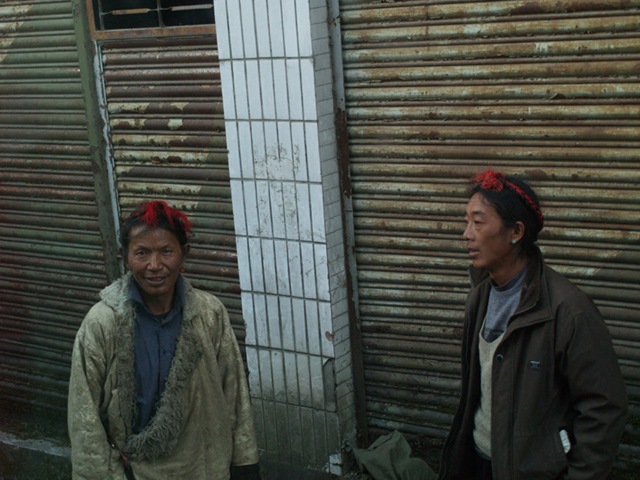
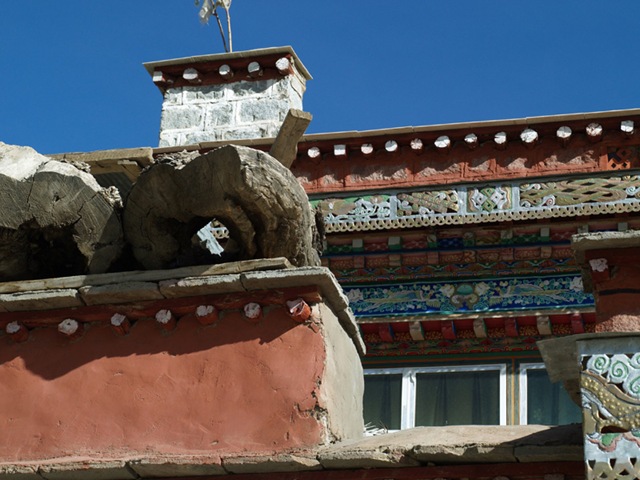
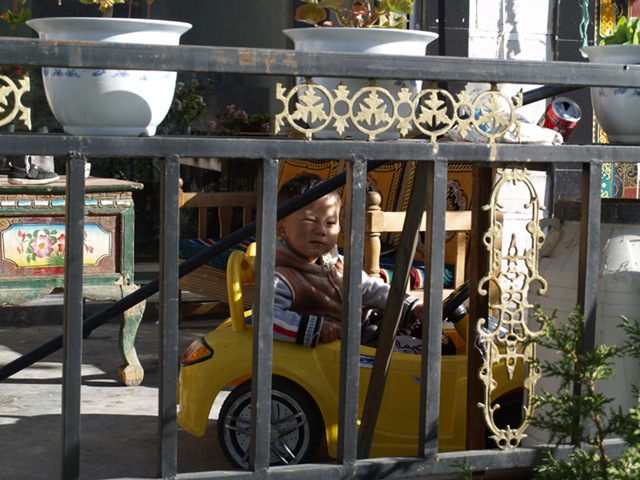
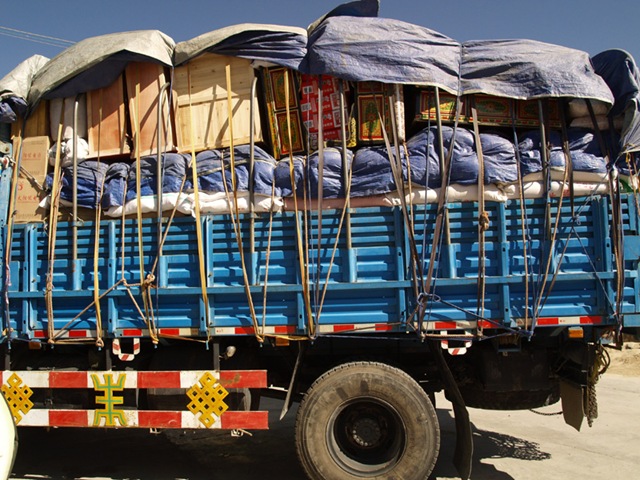
We recently returned from a trip to Nepal which included an 8 day sortie into Tibet. And why the link with the day dream destinations of my childhood and adolescence? Because Tibet proved to be the most ‘day dreaming’ destination you can imagine. Yes, there were some familiarities: echoes of ‘Tintin in Tibet’ in the peculiar, not unattractive domestic architecture, ruddy cheeks on American-Indian style faces and the snowy peaks (no, not Snowy). It even awoke the memories of that strange book I read as an adolescent , ‘The Third Eye’ by the levitating monk, Lobsang Rampa. But on the whole, Tibet was on the edges of what I thought could exist. Now that I am a mature adult and most of my life has already happened, a real destination turns out to be almost more ‘unreal’ than any I dreamed up. I think pictures will demonstrate what I mean.


Tibet-1 tibet-7 tibet-22Tibet-3 Tibet-4   tibet-8 tibet-9tibet-11 tibet-12 tibet-13 tibet-14 tibet-17 tibet-15 tibet-16 tibet-10tibet-18 tibet-19 tibet-20 tibet-21  tibet-23   tibet-26   tibet-31

tibet-25 tibet-27 tibet-28 tibet-29tibet-30 tibet-32 tibet-33 tibet-34tibet-35 tibet-36 tibet-37 tibet-38  tibet-40 tibet-39  tibet-41 tibet-42 tibet-43

and many, many more…

Posted in Autobiography, Travel | Leave a comment

Comparisons

It’s one of the most stimulating aspects to embarking on travel to unknown or less well-known parts: a perspective on one’s own life.  It takes seeing things with your own eyes -images in the media somehow don’t register nearly to the same extent- to remind you that the way you live is by no means the only or best way. There are many ways to skin a cat. Houses needn’t be the way your house is, four-square and, well, Cape Townian. Lives don’t have to be dominated by the concerns that rule your life and the people in your society. One doesn’t have to shop in supermarkets and malls or drive cars on smooth roads. There are other options open and they work! How easy it is to lose that perspective when one is cocooned at home.

On our trip we spent time in two places that begged comparison: rural Mozambique and the Eastern Cape, ex-Transkei. I don’t know the reasons for the differences we witnessed.Geography and climate must play a huge role. Culture, development, infrastructure, all these aspects create a complex picture difficult to untangle. I have made some flying guesses which might very well be wrong. After all, we were visitors driving through the land, not living in it or studying it. My apologies if I have got it completely wrong.

The road

Mozambique is a huge country and there is one main road that runs north, recently upgraded. Villages line the route. Huts are arranged on either side of the road as if it was a suburban street instead of a thundering artery carrying huge trucks loaded with tree trunks the girth of silos and the occasional visitors such as us. Front doors face on to the road. In fact, it feels as if you are driving through people’s houses, invading their private spaces. The roadside is the focus of life. The road teems with people, mostly walking or riding bicycles and with the odd motorbike, three simple tiers that I assume are the expressions of upward mobility ( excuse the pun) in the society. Markets congregate on the verges. Vendors of charcoal and produce string out between the villages so that it becomes difficult to tell whether one is passing through a village or not. (Visitor’s note: Finding an unpopulated spot to take a bush pee can be difficult.)I read somewhere that Mozambique’s population is 12 million. I could swear we saw every single Mozambican along the road. What we did not see was signs of habitation in the bush away from the margins of the road. Perhaps vegetation obscured our view but I find it hard to believe that the landscape would not afford us any opportunities to see signs of habitation further in. I assume that the population has gravitated to the road and cling to it as an economic lifeline and that the vast hinterland is being depopulated.

How different was the Eastern Cape! The N2 is a terrifying experience. Cars and trucks whizz along it at high speed. Very few people walk alongside it (wisely) but even the side roads we took were remarkably free of pedestrians. Many of the local population had wheels and there were lots of very new cars to be seen. Many taxis and bakkies were about… had people largely given up using their legs as their main means of getting around? I can understand this as the terrain is mountainous and walking from place to place must be completely energy sapping. In contrast to Mozambique, the vista from horizon to horizon was peppered with homesteads clinging to the hills. The density of human habitation was such that one felt slightly hallucinated from the repeated details stretching into the furthest distances, as if one was viewing a painting by one of the primitive style artists such as Grandma Moses or those Early Renaissance landscapes from Sienna by the Lorenzetti brothers. As we drove through, I was searching for a word to encapsulate what we were seeing.”Is there a term, peri-rural, that is the equivalent of peri-urban?” I asked Peter.

The condition of the roads themselves? The worst stretch of road we encountered was between Flagstaff and Mkambathi in the Eastern Cape. That bit of spine-jarring, juddering driving was far worse than negotiating the furthest northern reaches of Mozambique. It’s hard to believe but true.

Houses

The average village home in Mozambique is a small mud, wood and grass structure that seems almost fragile. Panels of woven palm create roof tiles, walls or fences. Front doors are made from the heavy, dense wood of the region and look incongruous placed in crumbling mud walls. There are a number of more Western structures. The thing that strikes you is just how small these can be, almost like children’s playhouses.

The homesteads in the Eastern Cape were fascinating. Nearly every plot of land had three structures: a small traditional rondavel, its thatch roof often replaced with tin or asbestos cement, an afdak or flat roof structure sometimes separate from ,sometimes an extension of the rondavel, and thirdly, a conventional Western house, either complete or in the process of being built. The styling of the latter structures is peculiarly bourgeois, what we in the Cape call northern suburbs. Nearly all are made of face brick and have metal windows, heavily burglar barred. The front door is framed with a portico on pillars. Bizarrely, most of the homeowners seem to choose a rather fancy design of column like twisted sugar barley. We wondered if these three structures are remnants  of the development of the homestead over years, again signs of upward mobility: first a traditional round hut, then the afdak extension and finally, the conventional Western house. The rate of building that is going on in the Eastern Cape seems unbelievable. Sugar-barley houses are being built at a rate of knots. What is a sure bet career in the Eastern Cape? A builder or, since the householders might be doing it themselves, a building material supplier.

Diet

For the average Mozambican, getting food on the table is a struggle. There are no fat people to be seen and people work hard to get their food. You see small fields of cassava, groundnuts, mielies,sugarcane, sweet potatoes, rice,vegetables and fruit trees including avocados and nut trees, everywhere. This is a simple agricultural economy. The environmental damage is obvious: food pressure means driving through areas of indigenous forest that are being slashed and burnt and turned into food.(Is this as destructive as the deforestation taking place by commercial loggers to feed the voracious appetite for good, hard woods in the West and Asia? Hard to tell.) It means watching people catching the tiniest reef fish in their nets. It is hard to criticise hungry people. But one thing is for sure: the diet of fish (dried away from the coast), vegetables, fruits, nuts and beans, and let’s not forget the miracle food of coconut, has got to be the most healthy diet you can find.

In the Eastern Cape, we had to look hard for the remains of a mielie field. We saw a bit of cattle herding but not nearly as much as we remembered from years before.There are no fruit trees, even those that would suit the harsh climate and thin soils. The towns are humming with shoppers buying, buying, buying. Fast food outlets are doing a roaring trade. Fat adults and teenagers abound. The contrast with the lithe, energetic Mozambicans was pointed. 

Age

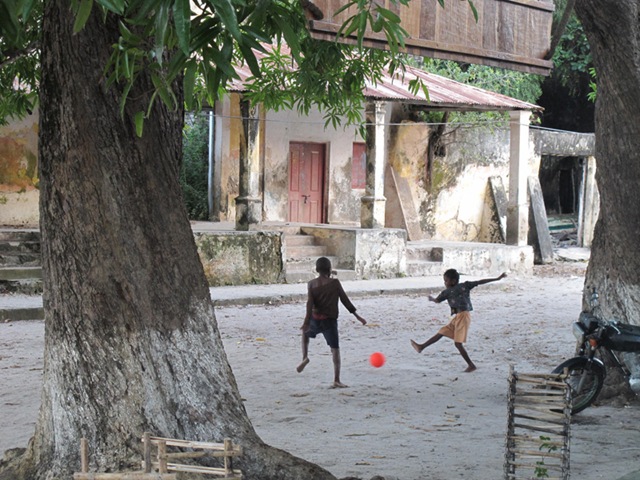
Baby-making seems to be the number one Mozambican national pastime.I have never seen so, so many children. Nearly every woman of child-bearing age and many a child , some as young as six, has a baby attached to their hip. There are flotillas of children kicking up the dust wherever you look.As an ex-teacher I could not help thinking: How on earth was Mozambique schooling these millions?

At the same time there are very few old people to see. In fact, the scarcity of people over 40 or 50 was so marked that we played a game of spotting elders and did not come up with more than a number in the teens for a whole day’s driving. It was spooky. The reason that first comes to mind is Aids but could it be that they were all simply indoors ( a cultural thing?) and would it be the 50 plus generation that would be decimated by the disease? Questions we couldn’t answer.

In the Eastern Cape we saw a good sprinkling of the elderly. Was this a sign of better Aids treatments available or better general access to medical treatment?

Conclusion 

From these contrasts we deduced that there was a cost to getting a toehold into the middle class, which was how we summed up the Eastern Cape scenario. The rural Mozambicans we saw had very little chance of “making it” in the Western sense but the quality of their lives was not without its merits. I do not think it is naive and romanticised to say that as people fling themselves into a higher trajectory, they lose as much as they gain. I’ve pondered this issue before with regards to my parent’s decision to immigrate to South Africa so that they could “make it.” 

Yes, travel gives you lots to chew on.
Posted in issues, Travel | Leave a comment

Charlie’s House – an update

    word1  

In 1989 my first published picture book, “Charlie’s House”, was released. The story of how it came to be and threw me into the trajectory that I have subsequently taken is worth repeating.( Apologies to all of you who have heard it many times.)

I attended a two-session workshop run by Niki Daly at the Mowbray civic hall for people interested in writing or illustrating children’s books after meeting Niki and his wife, Jude, when our sons attended the same pre-school. We were asked to choose our area of interest and I remember not being sure whether to tick writing or illustrating, as I was, if you must know, uncertain about both. In my wake was a fine art degree which had left me with a frustrating artistic bent rather than solid illustration skills. Writing had always come easily to me and been pleasurable. I had kept numerous diaries when I was a child. Of late I had had a few articles published in local magazines, an attempt to generate some income after I left teaching to be with my young children. But that was the sum total of my writing experience.

I can’t recall what category I chose but I do remember coming away from the first session on an enormous high.

This was it. This was what I had been waiting for. This made sense.

Niki had set  some “homework” for us: Write about an incident in your childhood, pop it into an envelope and post it to me, he had said. I needed and still need no invitation to throw myself into the past and rummage in it for the child that was me. That nudnik of a girl lives a hair’s breadth behind my daily life waiting, demanding, screaming! to be heard.

The very night I got home from the workshop, I started. Three “prose poems” were the result: “Ali and the Yeoville Flats Gang”, “Christmas in Yeoville” and “My Father Told Me”. I am only a tiny bit ashamed that I shoved a sick baby with a very sore ear into my husband’s arms to burn these words onto paper. The next day I found my way to Niki’s neighbourhood, brought the car to a gliding stop outside his house and quietly opened the lid of the post box on his gate to make a surreptitious drop-off. I was embarrassed to be seen to be so keen as to have not trusted the postal service or at the very least delayed my response to a decent interval.

At the next workshop, Niki read the pieces out loud. It was a heady feeling. I worked hard at not feeling or looking feeling grand but when, after the workshop, Niki asked me if I had written any other stories that he might be interested in illustrating , I was so stunned, I could barely speak. I think I nodded and that nod was a lie. We made an arrangement for me to come over to his house with more stories. I had a couple of days to write up a storm. “Charlie’s House” was one of the stories that I brought to Niki. The book grew from that encounter.

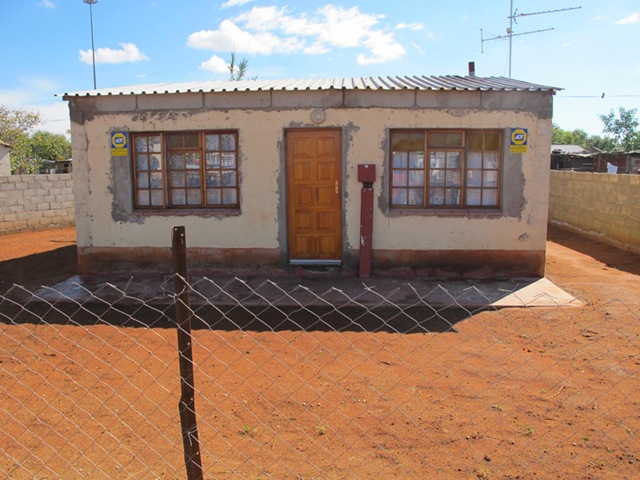
And now something about the actual story of Charlie’s House. Christine Mogotsi came to work for us when I was still teaching and my eldest son, Noah was just under a year old. It was the beginning of a friendship that has endured well beyond the 12 years she was with us and left to work in the hotel industry as a cleaner. Her only son, Charlie Tankie Mogotsi, was a little younger than Noah and became a frequent visitor and playmate.

Christine was in dire straits when we first met. She was living with her mother and young son in a backyard shack on someone’s property . Her position was insecure and she had to move a number of times including a stint in an informal settlement where the unhygienic and unsafe conditions appalled her. At the time that I attended Niki’s workshop, we were fighting a determined battle on her behalf to find something half way decent for her and her small family . As I sat down to write stories for Niki, it was natural to plug into something that was currently playing out in our lives.

The picture book describes Christine’s predicament through Charlie’s play. Like all young children, Charlie shifts into an imaginative zone where mud and bits of scrap become the medium to merge what he understands of the adult world and his own aspirations and dreams.

After ‘Charlie’s House’ was published, Christine finally found and bought a house. She, Charlie and her mother lived in it until last year, when she sold it and went to live in Kimberley from where her family originated. The decision to leave a secure job in Cape Town was difficult but once again Christine showed her incredible determination to do what was right for her child.

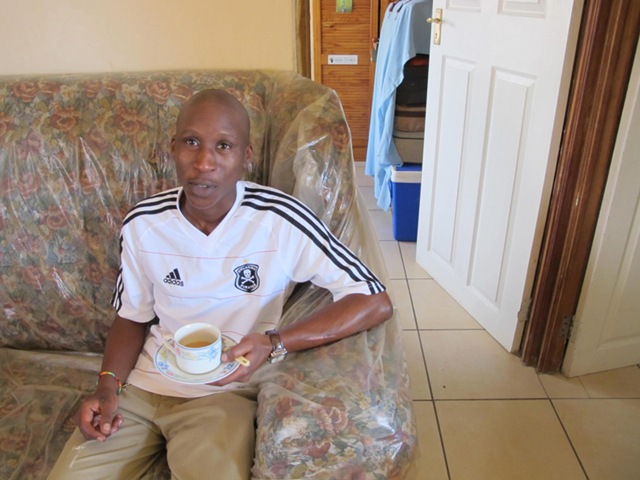
Charlie – a delighful, wonderful child – had done fairly well at school until the the later part of high school when he started to use drugs. My children who had maintained – and still maintain – a relationship with him, were unaware of the extent of the problem but his mother had no illusions. Phone call after phone call from Christine related Charlie’s slide into a dark place. A stint at rehab and an intervention by a drug counsellor at his home did little to change matters. Charlie was demoralised. Without a matric under his belt and with no hope of meaningful work, he had lost the way forward, forcing Christine to come to the decision that the only way to save her son was to take him away from the environment which was poisoning him.

And miraculously, the move to Kimberley did just that. Charlie began to wash and take care of himself and his mother and granny. He got himself a job and as the only breadwinner, is supporting his family. He underwent a Tswana cleansing ceremony. He began to attend church and the latest news is that he has been promoted to a managerial position at the establishment where he works. We are so proud of Charlie, our hearts are busting.

The last pages of “Charlie’s House”, the book, read:
Charlie sits down to a meal of bread and soup with his mother and granny . He carefully bites two mouthfuls from the centre of his bread and places the slice on his nose. He dreams he is wearing sunglasses and driving his very own car past the house that he has just built. “Don’t play with your food. Eat up,” says his granny. But Charlie puts his foot down and keeps on going.

Keep your foot down and keep on going, Charlie.

On our way north we visited the Mogotsis in their “new’ house in Kimberley.

Charlie_4

                  A new start in Kimberley

 word4    Charlie_6   charlie_5

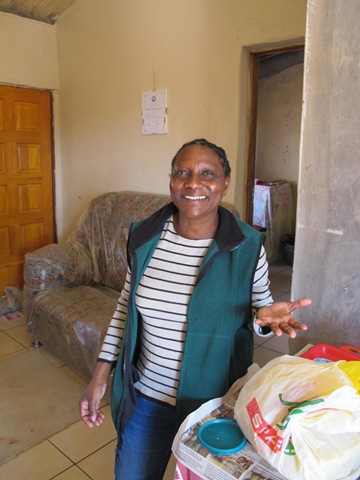
     Charlie in 1989                           Charlie in 2011                      Christine, lively, lovely as always

charlie_2   Charlie_3

Charlie entering the house              Mavis, Charlie and Christine Mogotsi

Posted in Autobiography, Children's books | Leave a comment

My father and his brother

Gershon-and-Boris

A photo of my father, Gregoria-Grisha-Gershon-George, aged 2 and his older brother, Boris,4, before they left the Soviet Union in 1928.

Look at the two of them! No words needed.

Posted in Autobiography, People | Leave a comment

Ruined Hotels, Mozambique

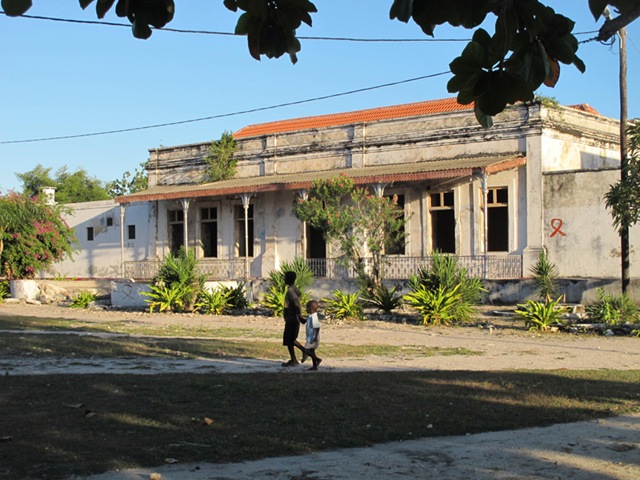
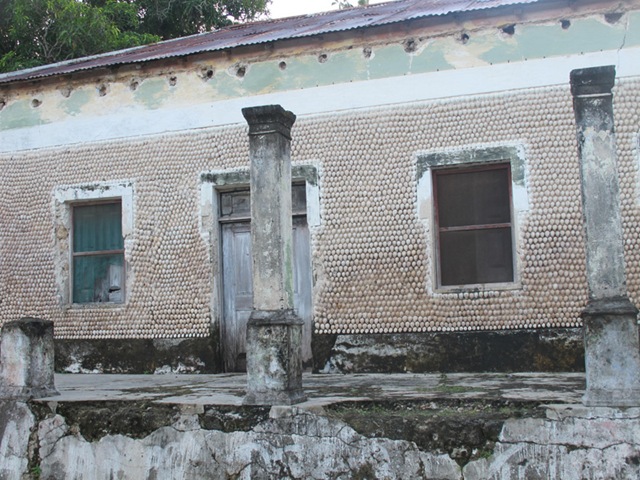
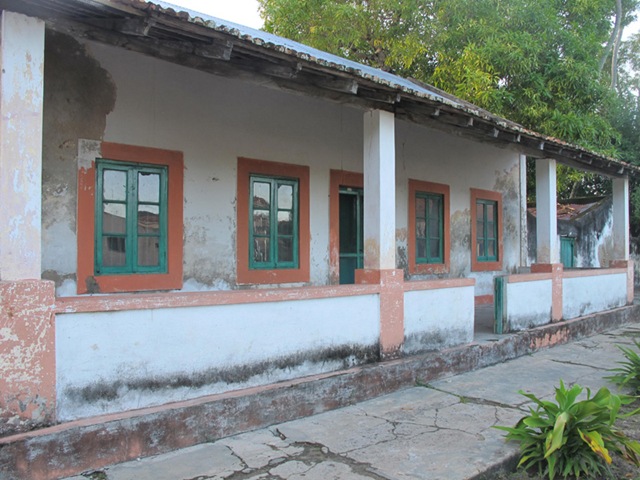
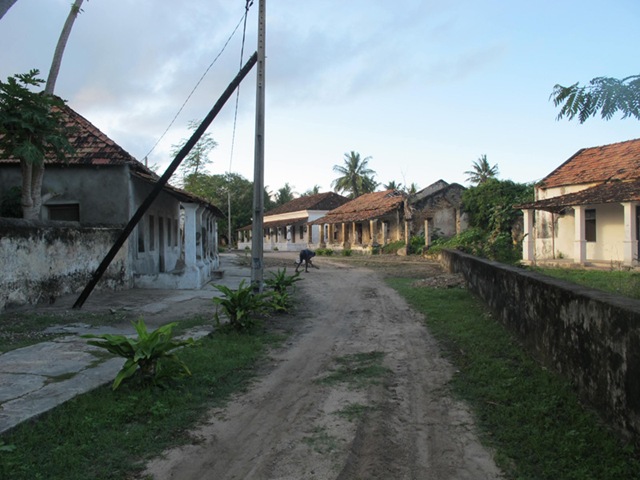
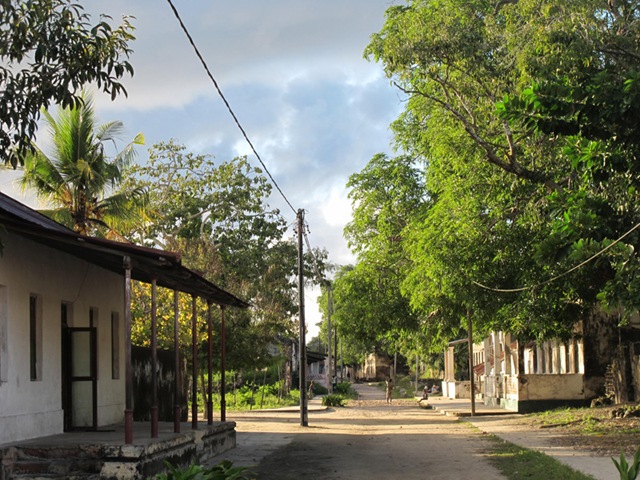
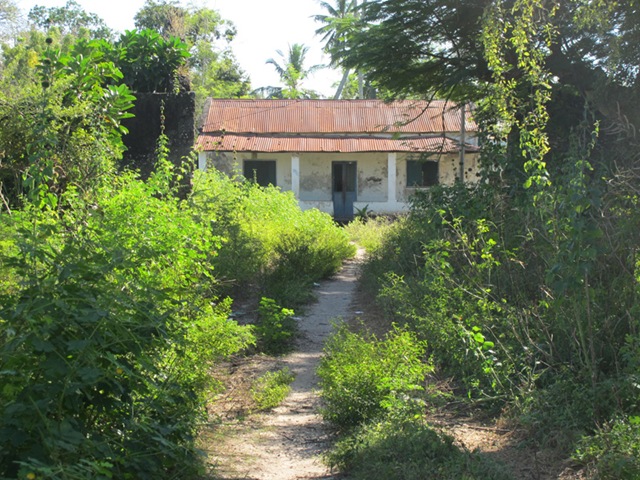
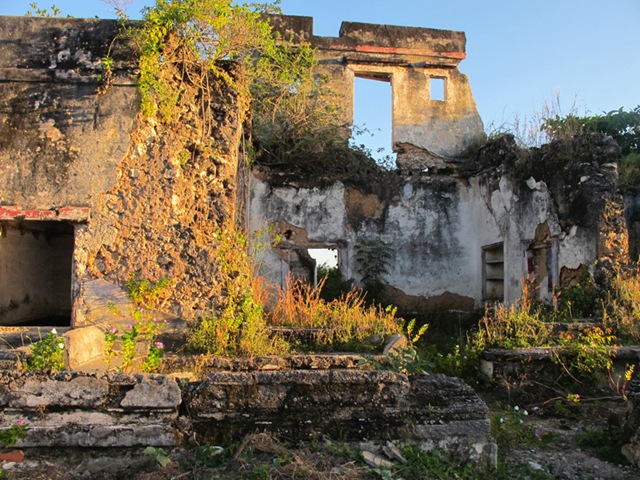
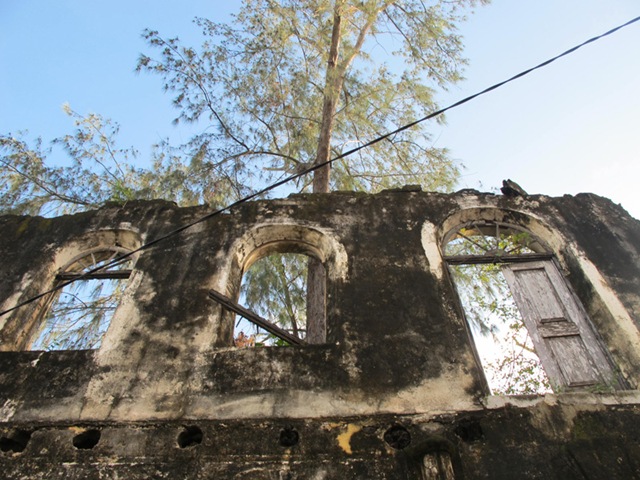
Surprises abound in Mozambique. What we did not expect is to find abandoned ruins of once splendiferous, lavish hotels on remote islands and mainland coastal towns.

Two islands of the Bazaruto archipelago, Santa Carolina and Margaruque, sport atmospheric rotting hulks with a touch of late Art Deco embellishment, remains of the enterprises in colonial times of entrepreneur-tycoon, Joaquim Alvez. It seems as if the rich and famous would fly out to these destinations for naughty weekends and we saw this for ourselves when we chanced upon a spooky, tarred airstrip right in the middle of Santa Carolina, weedy and cracked.

In Pomene, situated on a dramatic rocky headland punctured with blowholes and caves, stands another forlorn beach resort this time with a distinctly Iberian flavour. Our guide book asserts that efforts are being made to rehabilitate these old ladies but we saw not a sign of that. We were left wondering why.

Santa Carolina

hotel1  hotel-2

hotel-3  hotel-4

hotel-5  hotel-6

hotel-7  hotel-8

Pomene

hotel-9  hotel-10 

hotel-14  hotel-11

hotel-13          hotel-12

hotel15   hotel-16

Posted in Autobiography, Travel | Leave a comment

A new view

The equipment is minimal: a tube and a pair of plastic goggles, there is, luckily, no skill to it at all, yet the pleasure I discovered snorkelling the warm reefs of Mozambique and Northern Zululand, has me hooked. I am a snorkaholic looking for her next fix!

We had successes at Nacala Bay, Santa Carolina and Margaruque on the Bazaruto Archipelago and then a late flash at Kosi Bay mouth after the weather changed and scotched our chances in potentially great spots such as Zavora and Tofo. It seems as if chancing upon the perfect day is as ephemeral as the visions that await you as you slide into the warm water and goggle upon a world that is simply – and the cliche is unavoidable – breathtaking.

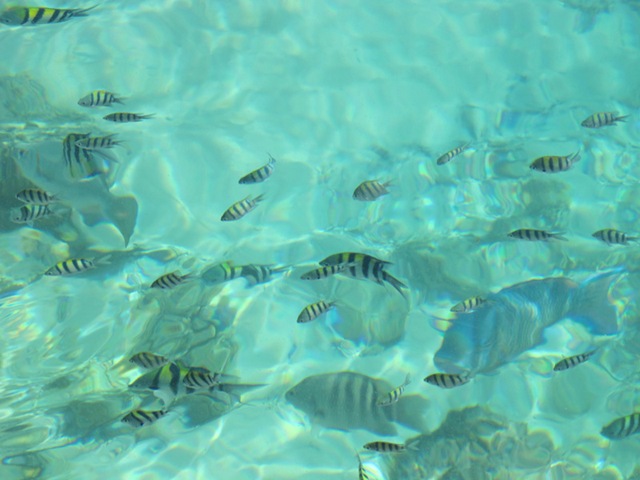
The diversity of fish I saw got me thinking… just how could there be so many varieties and combinations and weird, vivid colours, shapes, patterns, many completely over the top? I know that the scientists would have you believe that each twist is an evolutionary adaptation, a breeding strategy or an attempt by a species to find their niche in the ecosystem. I couldn’t help but feel that something else is at play here, some evolutionary whorl that has slipped away from its original raison d’etre. We do know this happens. We humans and the development of our brain is an obvious example – what possible evolutionary purpose does Shakespeare fulfil?  The reef fish, I decided, had got caught up in an extra-evolutionary passion. Their complex language of colour, shape and pattern had spun clear out of the realm of what was necessary and entered the world of superfluity, imagination, invention. I have no scientific proof of this, of course, yet to me, these little fishies were Shakespeares of the reef!
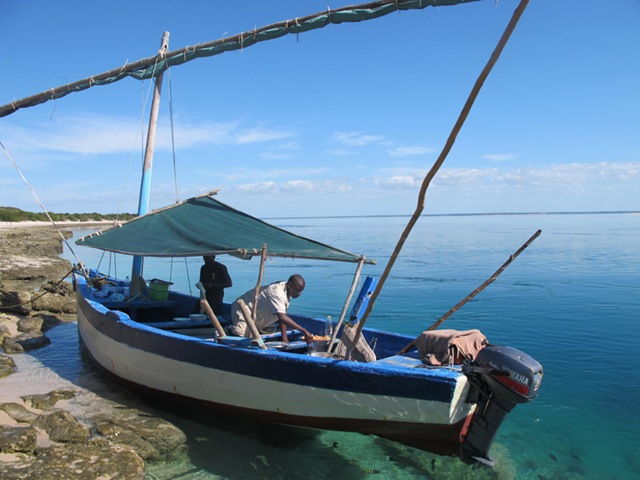
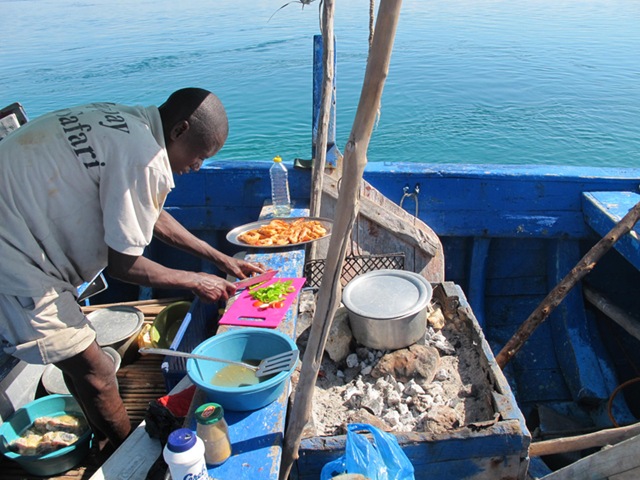
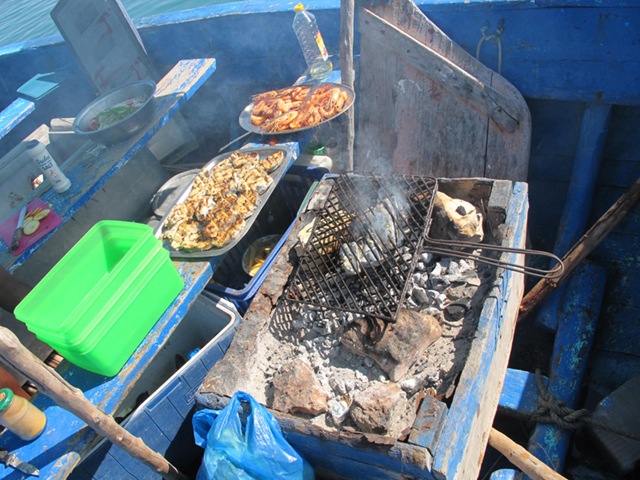
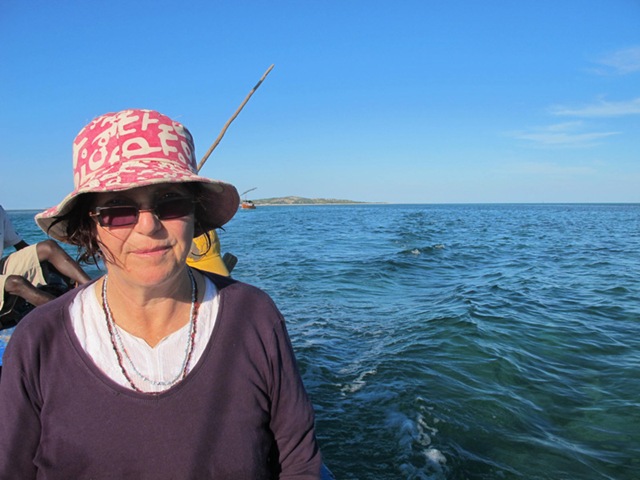
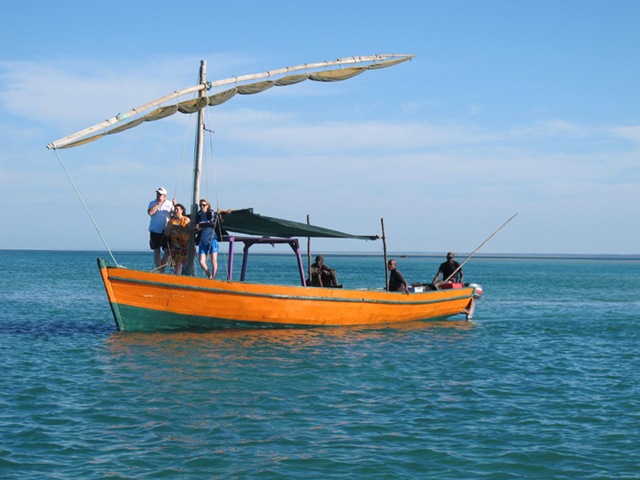
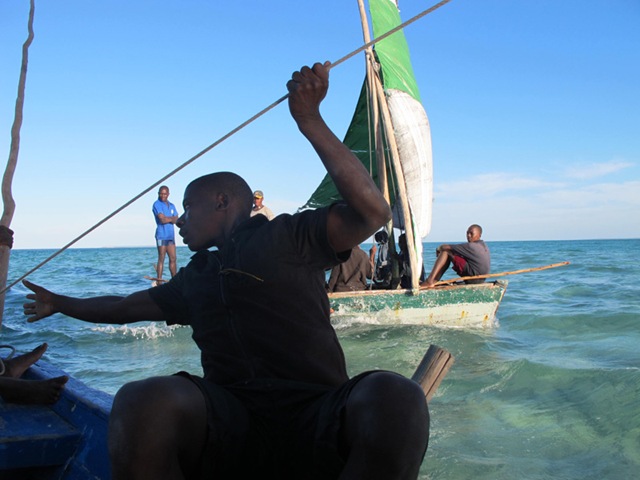
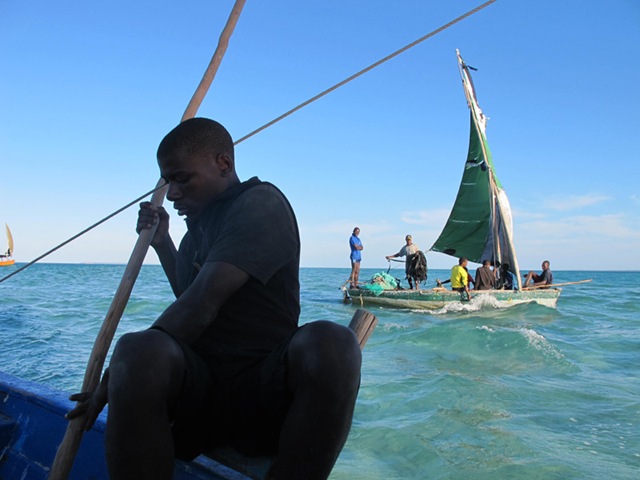
The photographs below show the trip out on a dhow to the island of Margaruque from Vilancoulos on a silky calm day where the sea seemed like a glass-green goddess we were dipping into. The dhow moored on a long rocky shelf along which you floated, allowing the current to take you from the one end to the other, creating underwater scenes rather like reverse television: you are moving, the picture is more or less stationary. Because we had no underwater camera the photographs of the fish we took from the surface do not reflect a fraction of their true colour. But what a juxtaposition! A boat whose crew were cooking the most mouth watering lunch on an onboard brazier ( prawns, barracuda streaks, salad, rice and fruit) floating on a transparent turquoise sea in which a host of fish mill awaiting discarded scraps from the cooks. When one of the sailor-cooks, scraping off bits of fish skin from his chopping board into the sea, said, “They are eating family,” I found myself utterly enchanted by the place, the time and the company.
 

new-view-5  new-view-6 new-view-2  new-view-3 new-view1  new-view-4 new-view-7  new-view-10 new-view-9  new-view-8

Posted in Autobiography, Travel | Leave a comment

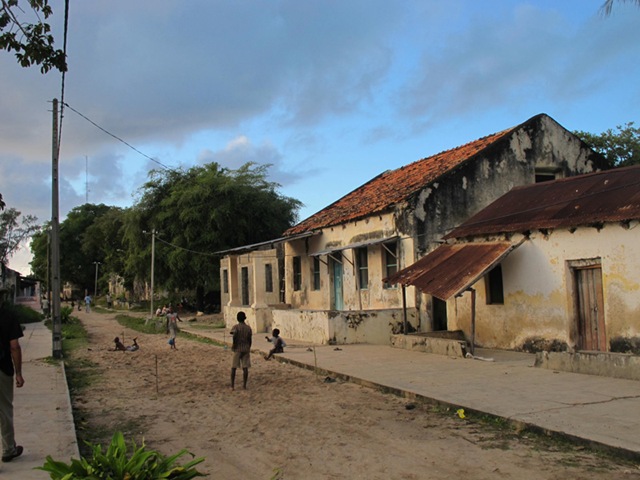
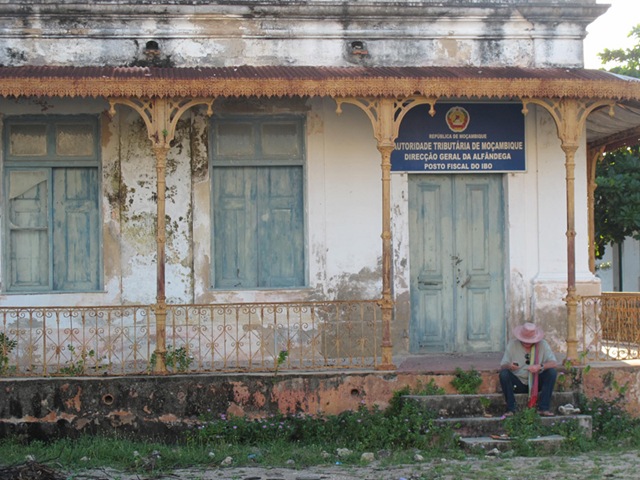
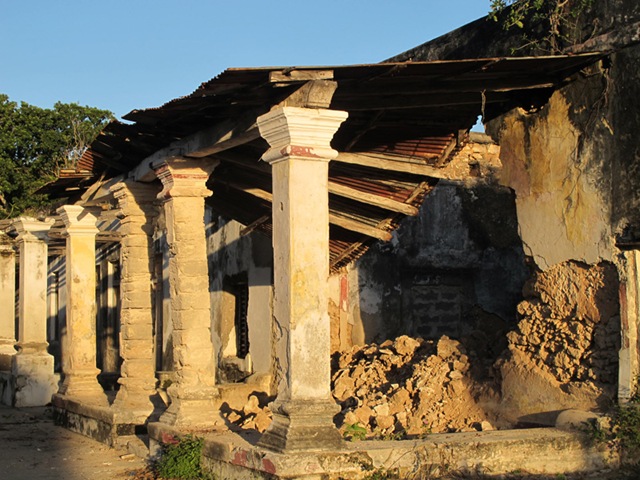
Anybody for a ruin on Ibo?

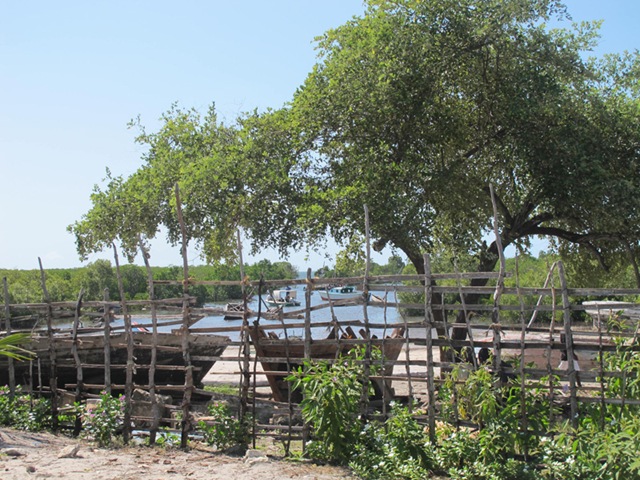
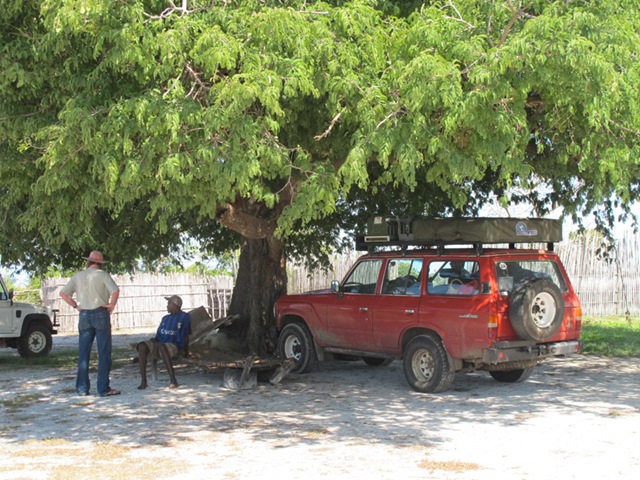
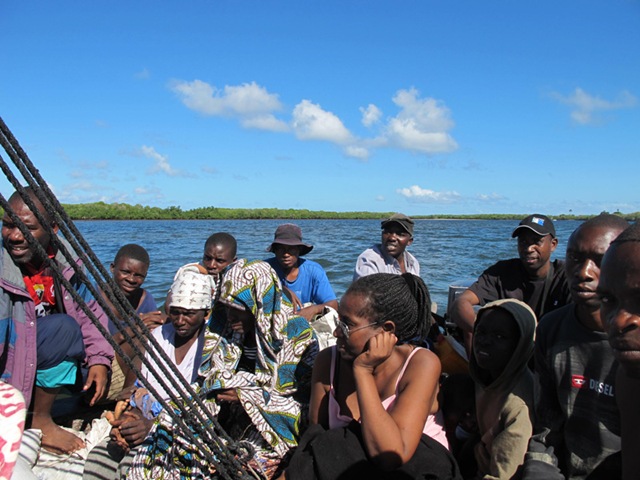
Getting to the island of Ibo on the Quirimba archipelago is no mean feat. It’s either a dollar-hefty flight from Pemba for the well-healed or a long sortie by vehicle on dodgy roads to a launch-off spot on the mainland, chancing your life on a 1 to 3 hour crossing on the overcrowded local ‘chappa’ (taxi) dhow plus, perhaps even more terrifyingly, chancing leaving your vehicle behind under a tree at the extraordinarily named Gringo’s Place.

Tandanhangue   gringo's-place

The launch-off spot                                     Gringo’s Place

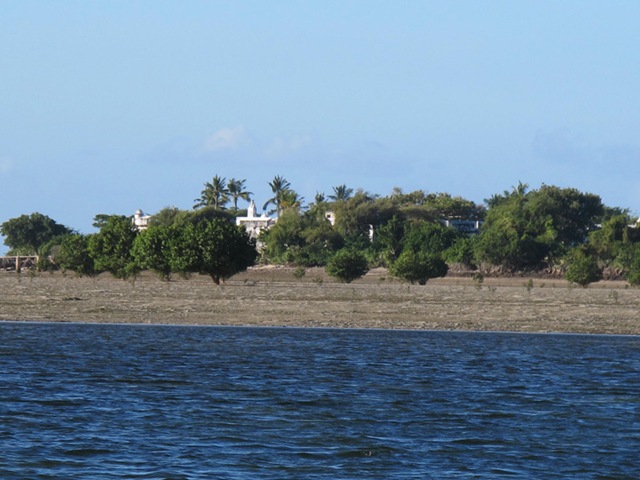
 chappa-to-ibo   approaching-Ibo

The crossing                                                Approaching Ibo

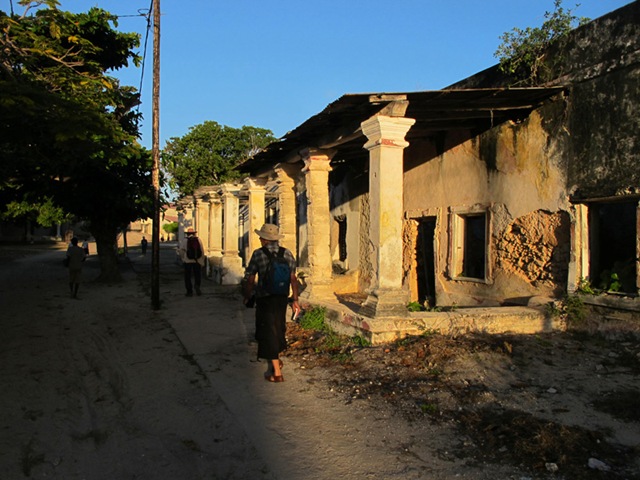
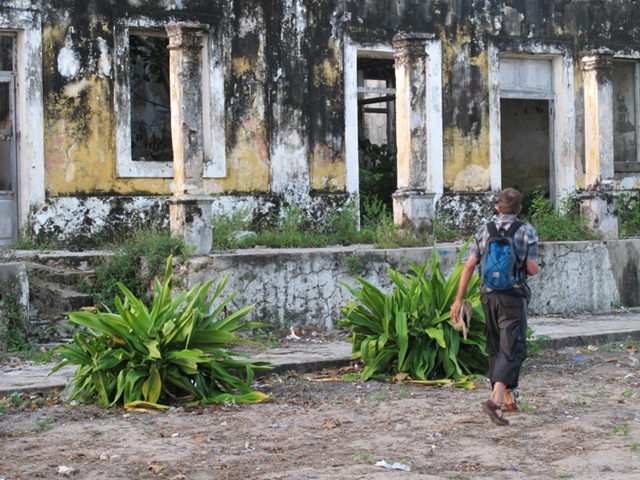
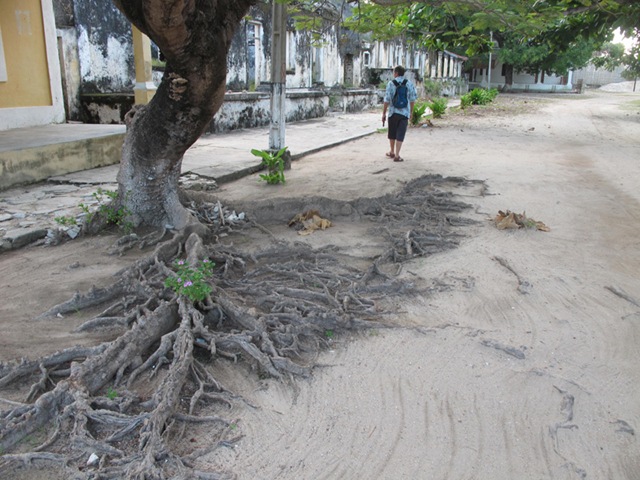
Your destination? A feast for those of us who can’t resist creating alternative-life scenarios whenever they find a crumbling, romantic building. Add a laid-back population, a tropical sea, mangroves, seafood to die for, a thriving silversmithing concern, a historic fort, and it doesn’t take more than a day for you to be scheming and plotting returning to the island for 6 months to “write a book”, “start a business” etc. The usual. (Take away the heat, stultifying in the middle of winter and supposedly fifty times worse in summer. Also, the deafening Saturday night disco that shakes the island to its very coral foundations.)

But this is for you die-hard romantics who dream of fixing up ruins in exotic places:

ibo-ruin1  ibo-ruin-2 ibo-ruin-3 ibo-ruin-4 ibo-ruin-5 ibo-ruin-6 ibo-ruin-7  ibo-ruin-9 ibo-ruin-10 ibo-ruin-11 ibo-ruin-12 ibo-ruin-13 ibo-ruin-14 ibo-ruin-15 ibo-ruin-16 ibo-ruin-17

Posted in Travel | Leave a comment

Architectural delights in Mozambique

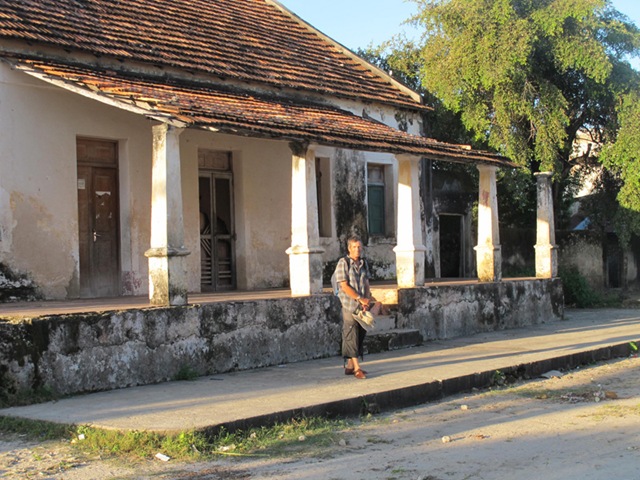
Although we’d read about it and filed it in the back of our minds, we were both surprised and enchanted by the buildings we saw in Mozambique. From the minute you crossed the border, you felt that this was another world and that the colonial powers here had left a completely distinctive mark on the landscape.It was not only a matter of the signs and adverts in an exotic looking-Portuguese script. In contrast to the vernacular mud, stick and thatch, anything in cement or brick from the humblest structures to the infrequent grander buildings,felt different.   There was something about the proportions , the placement of features, the love of accenting windows with thick cement copings and the odd bit of decoration that made it so. There were echoes of our childhood memories of the old Yeoville where Portuguese immigrants created in tiles, cement and that ubiquitous pastel green, homes that spoke to their aesthetic.

And then there were the small scale art deco buildings from Inhambane and Maputo, preserved in all their sweet, nostalgic, imaginative perfection. Can you talk of wit when discussing a building? Not all ( in fact few)were restored and some were positively rotting away but their vintage was unmistakable.
 

inhambane-building-1   maputo-building-1   maputo-building-5

maputo-building-2   maputo-building-3   maputo-building-6


maputo-building-4     maputo-building-7

maputo-building-11     maputo-building-12

maputo-buildings-14     maputo-building-13

The building below was a social club that we spied on a busy Maputo street and we just had to go upstairs to explore it. It was functioning more or less as a bar/cafe but it was hard to tell if other activities weren’t happening there as well.

maputo-building-9     maputo-building-16    maputo-buildings-17

To provide the context, the view from where we sat on the veranda onto the streets:

maputo-building-10    maputo-building-18

More on the buildings of Mozambique soon.
Posted in Art commentary, Travel | Leave a comment

Splat! We’re back!

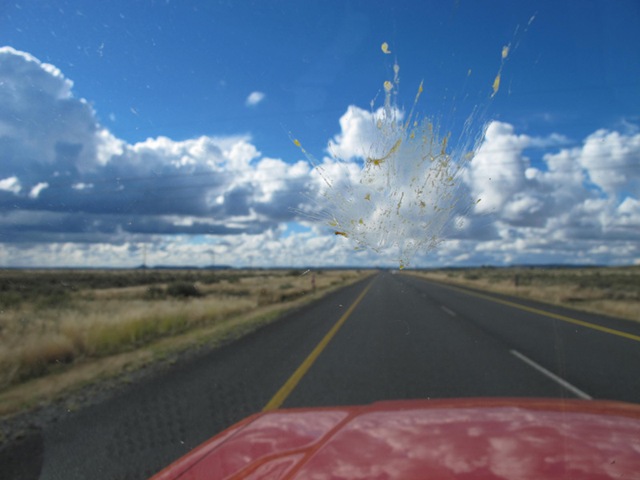
we-are-back

After two and a half months, we have returned from a 15 thousand kilometre trek through South Africa, Zimbabwe, Mozambique and Swaziland. I have lots of ideas and pictures to post which will appear over the next few weeks.

This one is from virtually the first leg of the adventure when we were driving through a haze of locusts in the Orange Free State admiring the cloudscapes and their reflection on the red hood of the Land Cruiser. You can fill in the rest:  the roar of the big engine, the pull of the road north and the sense of excitement we felt at the prospect of what lay ahead.

More soon.

Posted in Autobiography, Travel | Leave a comment

Up and Away

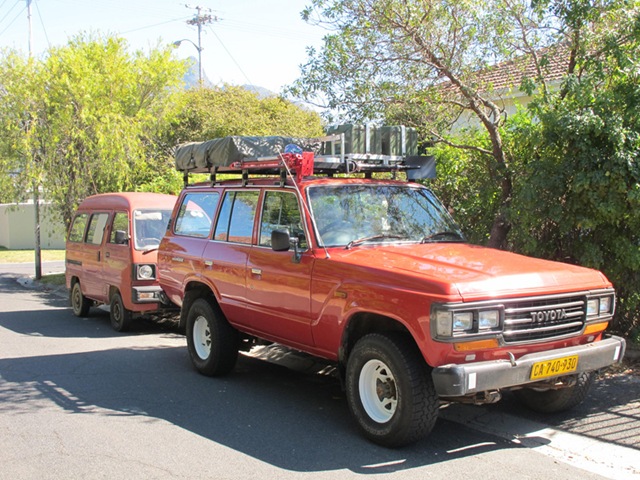
cruiser

Overtaken by the new girl on the block, Penelope Cruiser, The Red Skedonk ( see the article under BOOKBIRD profile under reviews for more information on the red skedonk, once a trusted family retainer) looks positively peeved.

What drama is being played out in the quiet suburban streets of the American presidents where we live? Ah…I smell the whiff of adventure in the air.

Yes, dear reader, this is an announcement that my spouse and I are about to embark on an expedition that will take us sweeping up north to the Kruger Park and then more north into Zimbabwe, and then much more north, so north in fact that we will be right at the top of Mozambique, where an archipelago of islands beckons. We will be away for 7 weeks. Wish us luck!

When we return – or should it be if we return? – I will post photos and whatnot about our trip.

Posted in Travel | Leave a comment